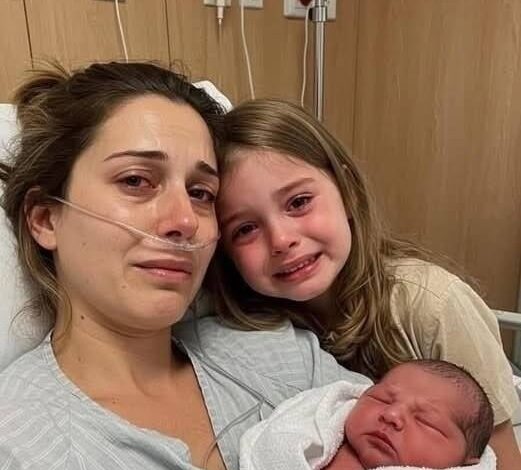
In the quiet early hours of February 14, 2026, a day typically reserved for celebrations of love and affection, a local family found themselves thrust into a harrowing odyssey of medical crisis and emotional turmoil. What was supposed to be the triumphant arrival of a new life became a frantic struggle for survival as a young mother gave birth prematurely. The initial cries of the newborn, usually a signal of relief and joy, were quickly overshadowed by a series of catastrophic complications that led medical professionals to deliver a devastating prognosis. In a matter of minutes, the delivery room shifted from a sanctuary of birth to a high-stakes theater of emergency medicine, leaving the family suspended in a state of profound shock and agonizing uncertainty.
According to preliminary reports from hospital sources, the mother’s physiological state underwent a rapid and alarming deterioration immediately following the delivery. Despite the tireless efforts of an interdisciplinary team of obstetricians, anesthesiologists, and critical care specialists, the complications arising from the premature labor proved to be exceptionally severe. The family has been thrust into a “waiting game” of the most painful kind, maintaining a constant vigil at her bedside while trying to process the grim reality that her condition remains critical. Friends and relatives, struggling to reconcile the image of the vibrant, life-loving woman they know with the person currently fighting for her life, have described the situation as a visceral nightmare that defies explanation.
The arrival of a premature infant introduces a secondary, equally daunting front in this medical battle. While the mother fights for her life in one wing of the hospital, her newborn is being cared for by a specialized team of neonatal experts in the Intensive Care Unit. The infant, born weeks before full term, faces a litany of challenges inherent to an early arrival—respiratory struggles, temperature regulation issues, and the need for constant, high-precision monitoring. Neonatal specialists have warned that the next several days will be the most critical for the child’s long-term development. For the family, the dual nature of this crisis is overwhelming; they are forced to divide their hope and their presence between a mother on the brink of death and a child fighting for the chance to live.
The impact of this story has rippled outward from the hospital walls, touching the hearts of the broader community and prompting a massive outpouring of solidarity. In the age of digital connection, news of the family’s plight spread quickly, leading to organized prayer vigils, blood donation drives, and a swell of support for the young father and extended family members who are currently navigating this labyrinth of grief and fear. The tragedy serves as a sobering and unwelcome reminder of the inherent fragility of life and the speed with which a moment of profound joy can be eclipsed by the shadow of mortality.
From a clinical perspective, the case highlights the persistent complexities of maternal and neonatal health, even with the advanced medical technology available in 2026. While maternal mortality rates have seen significant improvements over the decades, the specific combination of premature labor and postpartum complications continues to be a formidable challenge for even the most experienced surgical teams. The family’s reliance on a “miracle” is not just a spiritual plea but a recognition of the limits of human intervention in the face of such overwhelming biological odds. They are currently clinging to the smallest signs of progress—a stabilized heart rate, a marginal improvement in oxygen levels—anything that might suggest the tide is beginning to turn.
The psychological toll on the family members present at the hospital is immeasurable. To hear a physician speak of a loved one’s impending passing in the same breath as a birth announcement is a trauma that few are prepared to handle. The “Valentine’s Day” timing of the event adds a cruel irony to the situation, as the world outside celebrates romance while the family inside the hospital walls negotiates with fate. Counselors and hospital chaplains have been made available to provide support, helping the relatives navigate the “anticipatory grief” that often accompanies a critical prognosis. Every hour that passes without a further decline in the mother’s condition is viewed as a hard-won victory.
As the day progresses and the hospital lights dim for the evening, the focus remains on the “constant attention” required for both patients. The medical team is employing every tool at their disposal—from advanced pharmacological interventions to the latest in neonatal support systems—to buy more time. In the medical community, time is often the most valuable commodity; it is the bridge that allows a body to begin healing itself or responding to treatment. The family, meanwhile, has expressed a harrowing mix of fear and hope, stating that they are taking things “second by second” and cherishing the brief moments of proximity they are allowed with both the mother and the baby.
The community’s response has shifted toward practical assistance, with local organizations offering to coordinate meals and childcare for the family’s other dependents, ensuring that the father can remain at the hospital. This collective embrace serves as a powerful testament to human empathy, providing a small measure of comfort to a family that feels as though their world has been upended. The narrative of the “young mother” has become a rallying point for those who believe in the power of resilience and the possibility of a positive outcome even against the steepest of odds.
As of late this afternoon, the situation remains fluid. There has been no definitive change in the mother’s status, and the infant continues to be stabilized in the NICU. The family has requested privacy as they navigate these incredibly difficult hours, but they have expressed profound gratitude for the “miracle of care” provided by the hospital staff. They remain anchored by the hope that the story of this February day will eventually be told as one of incredible survival rather than tragic loss.
Ultimately, the story of this family is a portrait of the human spirit’s capacity to endure the unbearable. It is about the fierce, protective love of a family that refuses to let go of hope, even when the data suggests otherwise. As they wait in the corridors of the hospital, they are a living reminder that while life can be cruelly unpredictable, the bonds of love and the support of a community can provide a foundation when everything else seems to be falling away. The world waits with them, hoping for the miracle that will reunite this mother with the child who entered the world in such tumultuous fashion.