The rain began before my last call of the day ended, pounding the cobblestones of San Miguel de Allende with an insistence that felt personal—as if the sky had unfinished business with me.
From the back seat of my black SUV, I watched the drops slide down the tinted glass, distorting the city lights into blurred lines.
At thirty-six, I had learned to buy almost anything I wanted: old buildings turned into boutique hotels, small companies folded into my tech corporation, even loyalty disguised as silence.
But there was one absence money could never fill.
A wound that never healed with contracts or growing bank balances.
The traffic light turned red at a corner in the historic center.
My driver waited, engine idling.
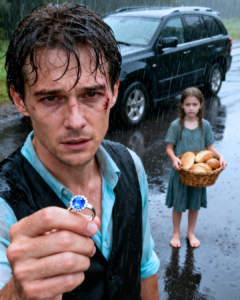
I was about to say “let’s go” when I saw her.
A thin girl, no older than fifteen, walked barefoot across the flooded sidewalk.
She hunched over to protect a basket covered with a white cloth that was no longer white—drenched by the rain.
The water hit her face; her dark hair clung to her cheeks—but she moved forward with silent determination, as if what she carried mattered more than her own comfort.
Something tightened in my chest—an old pressure I thought I had buried long ago.
“Stop,” I ordered without thinking.
The driver hesitated for a second.
“Sir, it’s raining…”
“Stop the car.”
The SUV pulled over beside the sidewalk.
I opened the door and stepped into the storm.
The rain soaked through my expensive jacket in seconds, but I didn’t care.
I walked toward her slowly, careful not to startle her.
She saw me and froze.
She had those big brown eyes—eyes of someone used to measuring danger before trusting.
“Are you selling bread?” I asked, trying to soften my voice, as if I could shrink my size, my suit, my presence.
She nodded slightly, lifting the cloth just enough to reveal conchas and bolillos—still warm, carefully wrapped.
Steam rose gently, mixing with the smell of rain and wet earth.
That was when I saw her hand.
On her left ring finger shone a silver ring with a clear blue topaz in the center.
It wasn’t just any ring.
The silver had fine, almost artisanal work.
The topaz had that specific light blue that glows in certain light.
The world went silent for me.
I had commissioned that ring myself.
Unique. Irreplaceable.
With a tiny engraving inside:
“D y X. Eternamente.”
I had given it to Ximena—the woman who vanished sixteen years ago, three months pregnant, leaving only a letter I still knew by heart.
“What’s your name?” I managed to ask under the rain.
“Cecilia… sir,” she whispered.
Cecilia.
Ximena always said that if she ever had a daughter, she would name her Cecilia—after her grandmother.
I bought the entire basket without thinking.
I paid triple the price and added an extra bill that Cecilia tried to refuse with quiet dignity.
“No, sir, it’s too much…”
“It’s not too much,” I said. “If you or your mom ever need anything… anything at all… call me.”
I handed her my personal card—the one almost no one has.
She took it carefully, as if it were fragile paper.
I stood there, soaked, watching her walk away barefoot.
I wanted to shout a thousand questions, pull the ring off her finger to confirm the engraving, run after her and say: “I’m your father”… but I didn’t.
I just stood there with my heart pounding.
I didn’t follow her.
But the ring did.
Part 2: the truth that had been hidden for sixteen years.
That night, in my apartment in Polanco, with the city glowing beyond the glass, I couldn’t sleep.
I took out Ximena’s yellowed letter—folded so many times it looked ready to tear.
Her delicate handwriting still burned:
“My Diego… forgive me for not telling you face to face.
If I look into your eyes, I won’t leave.
I have to go to keep you alive.
My brother Damián got involved with dangerous people…
I’m three months pregnant.
Don’t look for me. Please…”
For years I hired investigators, followed false leads, changed names.
I never married again, never loved anyone else without feeling like I was betraying a ghost.
And now—a girl wearing Ximena’s ring had appeared selling bread in the rain.
The next day I called a discreet man—one of those who doesn’t ask questions.
“Find Cecilia. But carefully. Don’t scare her. Don’t let her know anything.”
Three days passed that felt like three months.
The report arrived: Cecilia lived on the outskirts of San Miguel with her mother.
The mother cleaned houses, was ill, and the registered surname was Salazar.
There was a photo.
Cecilia smiling—with features identical to Ximena’s.
I didn’t wait any longer.
I drove myself that afternoon.
No driver, no escorts.
The house was small, walls not fully painted.
I knocked on the wooden door with a mix of anxiety and fear I hadn’t felt in years.
A thin woman opened it—hair tied back, eyes I recognized before my mind could accept what I was seeing.
Ximena.
Time had marked her face with soft lines, but it was her.
The same firm eyes.
The same way of holding the door as if ready to close it at any moment.
We stood in silence for seconds that felt eternal.
“Hello, Diego,” she finally said.
I didn’t know how to answer.
I looked at her hand.
The ring wasn’t there.
“Why?” was all I could ask.
Ximena took a deep breath and looked inside the house before inviting me in.
Cecilia sat at a small table counting coins.
She looked up and smiled politely.
“This is my dad,” Ximena said calmly, without embellishment.
The word hit the air.
Cecilia watched me with curiosity, not resentment.
She didn’t know the whole story.
We sat down.
Ximena explained: when she found out she was pregnant, she discovered that some of my business partners at the time were involved in shady activities.
She had received indirect threats.
She feared our closeness would put her in danger.
I—obsessed with expanding my company—hadn’t noticed the signs.
I hadn’t seen the fear in her eyes.
“I thought if I disappeared, you’d both be safe,” she said. “I sold the ring years ago to pay for an operation when Cecilia was little.
I got it back later from a pawnshop.
I never wanted to completely let it go.”
I felt a mixture of relief and shame.
I had spent sixteen years building an empire while my daughter sold bread in the rain.
Cecilia listened in silence.
When she fully understood, her eyes filled with tears that didn’t fall right away.
“Are you really my dad?” she asked.
I nodded, unable to say more.
There was no dramatic music, no instant hugs.
There was silence.
A silence heavy with lost years.
I returned home that night changed.
Not because of the money I already had—but because of what I had almost lost forever.
The following days were slow.
I didn’t try to buy their trust.
I didn’t offer to move them into a mansion right away.
I just showed up.
I helped improve the oven.
I quietly organized their finances without invading their dignity.
Cecilia continued selling bread for a while—by her own choice.
She said she liked walking through the center and feeling that every coin came from her own effort.
I accompanied her a couple of times under the sun, remembering the rain that first brought us together.
The ring appeared on her finger some afternoons.
A silver circle that had traveled through pawnshops, unknown hands, and years of silence—until it returned to us as proof that certain bonds don’t break so easily.
Sixteen years had hidden the truth.
But one storm and one blue flash were enough to begin rebuilding what fear had torn apart.
The rain fell hard on the cobblestones of San Miguel de Allende that June afternoon.
From the tinted window of his black SUV, Diego Salazar watched the water slide down in long threads, as if the sky were pouring out years of accumulated secrets.
At thirty-six, Diego had built a tech empire from nothing.
He bought buildings, companies, silences… but he carried in his eyes a shadow that money could never erase: the loss of the most valuable thing a person can have.
The traffic light turned red.
His driver waited.
Diego was about to say “let’s go” when he saw her.
A girl of about fifteen walked barefoot across the flooded sidewalk, hunched over to protect a basket covered with a white cloth already soaked through.
The rain hit her face; her dark hair clung to her cheeks—but she moved forward with silent determination, as if what she carried mattered more than her own comfort.
Something tightened in his chest—an old pressure he thought he had buried long ago.
“Stop,” he ordered without thinking.
The driver hesitated for a second.
“Sir, it’s raining…”
“Stop the car.”
The SUV pulled over beside the sidewalk.
Diego stepped out into the storm.
The rain soaked through his expensive jacket in seconds, but he didn’t care.
He walked toward her slowly, careful not to frighten her.
She saw him and froze.
She had those big brown eyes—eyes of someone used to measuring danger before trusting.
“Are you selling bread?” he asked, trying to soften his voice, as if he could shrink his size, his suit, his presence.
She nodded slightly, lifting the cloth just enough to reveal conchas and bolillos—still warm, carefully wrapped.
Then Diego saw her hand.
On her left ring finger shone a silver ring with a clear blue topaz in the center.
It wasn’t just any ring.
The silver had fine, almost artisanal work.
The topaz had that specific light blue that glows in certain light.
The world went silent for him.
He had commissioned that ring himself.
Unique. Irreplaceable.
With a tiny engraving inside:
“D y X. Eternamente.”
He had given it to Ximena—the woman who vanished sixteen years ago, three months pregnant, leaving only a letter he knew by heart.
“What’s your name?” he managed to ask under the rain.
“Cecilia… sir,” she whispered.
Cecilia.
Ximena always said that if she ever had a daughter, she would name her Cecilia—after her grandmother.
Diego bought the entire basket without thinking.
He paid triple the price and added an extra bill that Cecilia tried to refuse with quiet dignity.
“No, sir, it’s too much…”
“It’s not too much,” he said. “If you or your mom ever need anything… anything at all… call me.”
He handed her his personal card—the one almost no one has.
She took it carefully, as if it were fragile paper.
He stood there, soaked, watching her walk away barefoot.
He wanted to shout a thousand questions, pull the ring off her finger to confirm the engraving, run after her and say: “I’m your father”… but he didn’t.
He just stood there with his heart pounding.
He didn’t follow her.
But the ring did.
Part 2: the truth that had been hidden for sixteen years.
That night, in his apartment in Polanco, with the city glowing beyond the glass, Diego couldn’t sleep.
He took out Ximena’s yellowed letter—folded so many times it looked ready to tear.
Her delicate handwriting still burned:
“My Diego… forgive me for not telling you face to face.
If I look into your eyes, I won’t leave.
I have to go to keep you alive.
My brother Damián got involved with dangerous people…
I’m three months pregnant.
Don’t look for me. Please…”
For years he hired investigators, followed false leads, changed names.
He never married again, never loved anyone else without feeling like he was betraying a ghost.
And now—a girl wearing Ximena’s ring had appeared selling bread in the rain.
The next day he called a discreet man—one of those who doesn’t ask questions.
“Find Cecilia. But carefully. Don’t scare her. Don’t let her know anything.”
Three days passed that felt like three months.
The report arrived: Cecilia lived on the outskirts of San Miguel with her mother.
The mother cleaned houses, was ill, and the registered surname was Salazar.
There was a photo.
Cecilia smiling—with features identical to Ximena’s.
Diego didn’t wait any longer.
He drove himself that afternoon.
No driver, no escorts.
The house was small, walls not fully painted.
He knocked on the wooden door with a mix of anxiety and fear he hadn’t felt in years.
A thin woman opened it—hair tied back, eyes he recognized before his mind could accept what he was seeing.
Ximena.
Time had marked her face with soft lines, but it was her.
The same firm eyes.
The same way of holding the door as if ready to close it at any moment.
They stood in silence for seconds that felt eternal.
“Hello, Diego,” she finally said.
He didn’t know how to answer.
He looked at her hand.
The ring wasn’t there.
“Why?” was all he could ask.
Ximena took a deep breath and looked inside the house before inviting him in.
Cecilia sat at a small table counting coins.
She looked up and smiled politely.
“This is my dad,” Ximena said calmly, without embellishment.
The word hit the air.
Cecilia watched him with curiosity, not resentment.
She didn’t know the whole story.
They sat down.
Ximena explained: when she found out she was pregnant, she discovered that some of his business partners at the time were involved in shady activities.
She had received indirect threats.
She feared their closeness would put her in danger.
He—obsessed with expanding his company—hadn’t noticed the signs.
He hadn’t seen the fear in her eyes.
“I thought if I disappeared, you’d both be safe,” she said. “I sold the ring years ago to pay for an operation when Cecilia was little.
I got it back later from a pawnshop.
I never wanted to completely let it go.”
He felt a mixture of relief and shame.
He had spent sixteen years building an empire while his daughter sold bread in the rain.
Cecilia listened in silence.
When she fully understood, her eyes filled with tears that didn’t fall right away.
“Are you really my dad?” she asked.
He nodded, unable to say more.
There was no dramatic music, no instant hugs.
There was silence.
A silence heavy with lost years.
He returned home that night changed.
Not because of the money he already had—but because of what he had almost lost forever.
The following days were slow.
He didn’t try to buy their trust.
He didn’t offer to move them into a mansion right away.
He just showed up.
He helped improve the oven.
He quietly organized their finances without invading their dignity.
Cecilia continued selling bread for a while—by her own choice.
She said she liked walking through the center and feeling that every coin came from her own effort.
He accompanied her a couple of times under the sun, remembering the rain that first brought them together.
The ring appeared on her finger some afternoons.
A silver circle that had traveled through pawnshops, unknown hands, and years of silence—until it returned to them as proof that certain bonds don’t break so easily.
Sixteen years had hidden the truth.
But one storm and one blue flash were enough to begin rebuilding what fear had torn apart.