For hours, I lay there without moving, afraid that even the smallest shift would send a wave of pain crashing through my body.
The cold crept in slowly at first, a faint chill brushing against my skin, then settling deeper, pressing into my bones as the sun slipped lower and lower beyond the trees.
The forest, which had once seemed calm and familiar, transformed into something vast and indifferent. Shadows stretched long across the ground.
The sky faded from pale gold to bruised purple. And I remained where I had fallen, staring upward, trying to make sense of what had just happened.
My head throbbed relentlessly. Each pulse felt thick and heavy, as though my skull were echoing with the memory of the blow.
When I lifted my trembling hand to my forehead, my fingers brushed against sticky, half-dried blood. The sensation made everything real in a way my mind had been struggling to accept.
My own son had left me there.
The thought circled through my mind again and again, refusing to settle into logic. There are betrayals you read about in books or see in films, dramatic and distant. Then there are betrayals that strike so close they fracture your understanding of the world.
I could not reconcile the boy I had raised with the man who had looked at me without hesitation. I kept searching for an explanation—anger, desperation, confusion—but the simplest possibility sat heavily in my chest.
Money.
There had been tension in recent months. Subtle at first. Questions about insurance policies. Casual comments about inheritance. I had dismissed them as immaturity, maybe impatience. I never imagined they might lead to something irreversible.
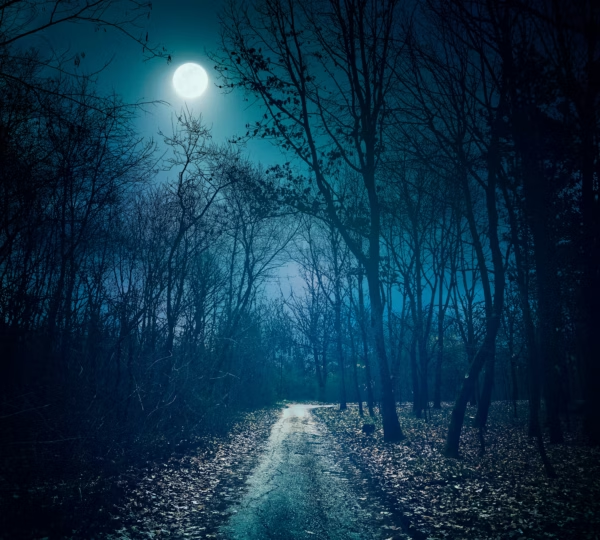
As darkness settled fully over the forest, fear began to replace disbelief. The temperature dropped quickly. Night air in the wilderness does not negotiate.
It settles in, damp and unforgiving. I realized that if I stayed where I was, shock or exposure might finish what had been started.
I did not want to die on the forest floor.
The instinct to survive can awaken even when hope feels thin. Slowly, carefully, I tested my limbs. My left side protested sharply, and my ribs felt tender when I inhaled too deeply. But nothing seemed completely broken. Painful, yes. Paralyzing, no.
I rolled onto my side.
The movement was enough to make my vision blur. I waited, breathing shallowly until the dizziness passed. Then I dragged one knee forward.
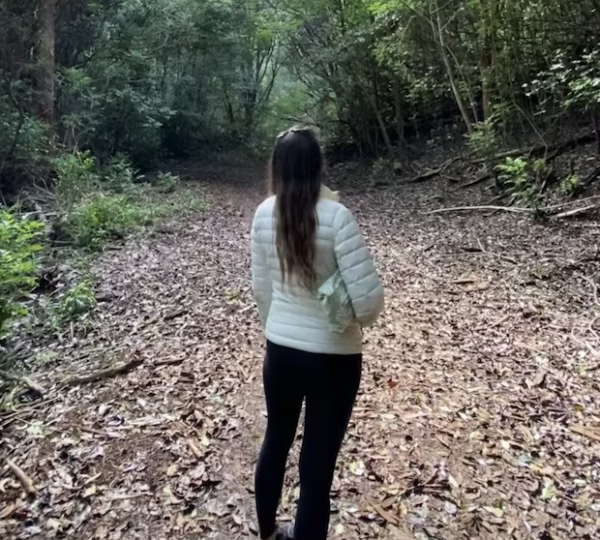
The ground beneath me was uneven—roots, loose soil, scattered leaves. Each inch forward required deliberate effort. I did not think about distance. I thought only about the next movement.
Crawl. Pause. Breathe.
Somewhere in the distance, an owl called. Branches shifted in the wind. The forest was alive, unconcerned with my suffering. That indifference fueled me in a strange way. If nature was not going to save me, I would have to save myself.
After what felt like hours—but may have been far less—I spotted a fallen branch thick enough to serve as support. It lay partially lodged between two rocks, stripped of smaller twigs.
I reached for it and nearly cried out when my shoulder flared with pain. Still, I wrapped my fingers around the wood and pulled it closer.
Using it as leverage, I forced myself onto my knees.
The world tilted. Black dots swarmed at the edges of my vision. I pressed my forehead against the branch and focused on breathing. Inhale. Exhale. Stay conscious.
Standing was worse. My legs trembled violently under my weight, as though they no longer trusted me to guide them. I leaned heavily on the branch, transforming it into a crude walking staff. One step forward. Then another.
The moon had risen by then, thin but bright enough to outline the path faintly. I did not know exactly where I was, but I remembered there was a ranger station several miles from the trailhead. If I could reach the main trail, I might find it.
Each step sent a ripple of discomfort through my body. My boots felt heavier than usual. My breathing was uneven. At times I had to stop entirely, bracing myself against a tree trunk while nausea passed. I whispered to myself—not prayers exactly, but instructions.
Keep moving. Do not sit down. Not yet.
Memories tried to intrude. My son as a child, running ahead of me on hiking trips, laughing when he tripped over roots. His first fishing rod. The time he insisted on carrying a backpack that was too big for him. I shoved the images aside. They weakened my resolve. I could examine the betrayal later. Survival demanded focus.
The forest floor gradually sloped downward, and I recognized a bend in the terrain that matched my memory of the trail. Relief flickered through me, fragile but real. I adjusted my grip on the branch and pressed forward.
Hours passed in fragments—walk, pause, steady breath, walk again. The night seemed endless, but eventually the sky softened from black to deep blue. Dawn was approaching.
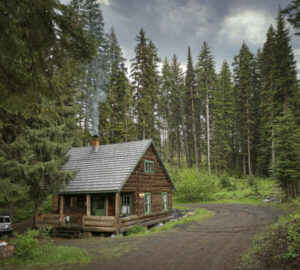
When I finally saw the outline of the ranger station through the trees, it felt unreal. A small wooden structure, quiet and still in the early light. Smoke did not rise from the chimney. No vehicles were parked outside. For a moment, panic stirred—what if no one was there?
I forced myself onward.
The final stretch was the hardest. My legs were close to giving out. My hands were raw from gripping the branch. I remember knocking weakly against the side of the building before collapsing onto the wooden steps.
The next clear memory I have is of a voice.
“Sir? Can you hear me?”
I opened my eyes to see a young ranger kneeling beside me. His face was pale with shock as he took in the dried blood, the dirt, the state of my clothes.
He asked questions rapidly—my name, what happened, where I was hurt. I tried to answer, but the words felt thick and slow.
“He left me,” I managed. “My son.”
The ranger did not react with disbelief, at least not outwardly. He radioed for assistance immediately. Within minutes, more personnel arrived. A blanket was wrapped around my shoulders. Gentle but firm hands stabilized my head and neck.
I remember the sensation of being lifted onto a stretcher and the overwhelming relief of no longer having to hold myself upright.
At the hospital, fluorescent lights replaced moonlight. Doctors and nurses moved quickly, assessing injuries, cleaning wounds, asking questions. I caught fragments of conversation—possible concussion, dehydration, bruised ribs, blood loss but stable.
When I told them what had happened, some exchanged uncertain glances. Trauma can blur details, and I imagine my story sounded improbable. An elderly man claiming his son had assaulted him and abandoned him in the woods could easily be mistaken for confusion or delirium.
But I remained consistent.
Over the following days, as my condition stabilized, law enforcement became involved. Investigators documented my injuries and returned to the forest with search teams.
Evidence was found—disturbed soil, traces of blood, personal belongings left behind. Phone records placed my son in the area at the time I described.
When confronted, he initially denied everything.
The investigation unfolded methodically. Financial records revealed recent inquiries into life insurance policies. Messages showed mounting debt and urgent conversations about money. Eventually, under mounting evidence, his story began to unravel.
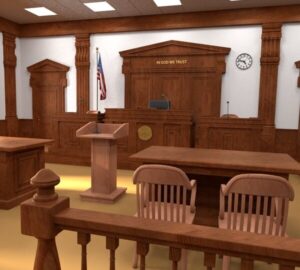
The legal process was long and painful. Sitting in a courtroom, listening to attorneys outline events that mirrored my worst memories, felt surreal. My son avoided my gaze. Whether from guilt, anger, or something else entirely, I could not tell.
He was ultimately charged and convicted for assault and attempted murder.
People often ask what it feels like to see your own child sentenced. There is no simple answer. Justice does not erase grief. Accountability does not mend the fracture in a parent’s heart. I did not feel triumph. I felt a quiet, complicated sorrow.
Recovery took time. Physically, I healed. The concussion symptoms faded. My ribs strengthened. The scars on my forehead remain faint but visible, a permanent reminder.
Emotionally, the healing is slower.
Betrayal by a stranger wounds your trust in others. Betrayal by family forces you to reevaluate your entire history. I replay conversations in my mind, searching for signs I missed. I question decisions. I revisit moments that once seemed ordinary.
And yet, I am here.
There are mornings when sunlight through my window feels like a second chance. Simple things—a warm cup of coffee, the sound of birds outside—carry weight they did not before. Survival reshapes perspective. It narrows your understanding of what truly matters.
I share my story not to dwell on pain but to emphasize something essential: the will to live is powerful. Even when hope feels distant, even when trust has been shattered, the human instinct to endure can carry you further than you believe possible.
Lying on that forest floor, as darkness closed in, I could not imagine reaching dawn. I could not imagine walking again, speaking again, telling the truth of what happened. But step by painful step, breath by determined breath, I did.
The forest that nearly became my grave became instead the backdrop to my survival.
And if there is one truth I carry forward, it is this: even in the face of betrayal, even when abandoned in the coldest darkness, the choice to keep moving can change the ending of your story.