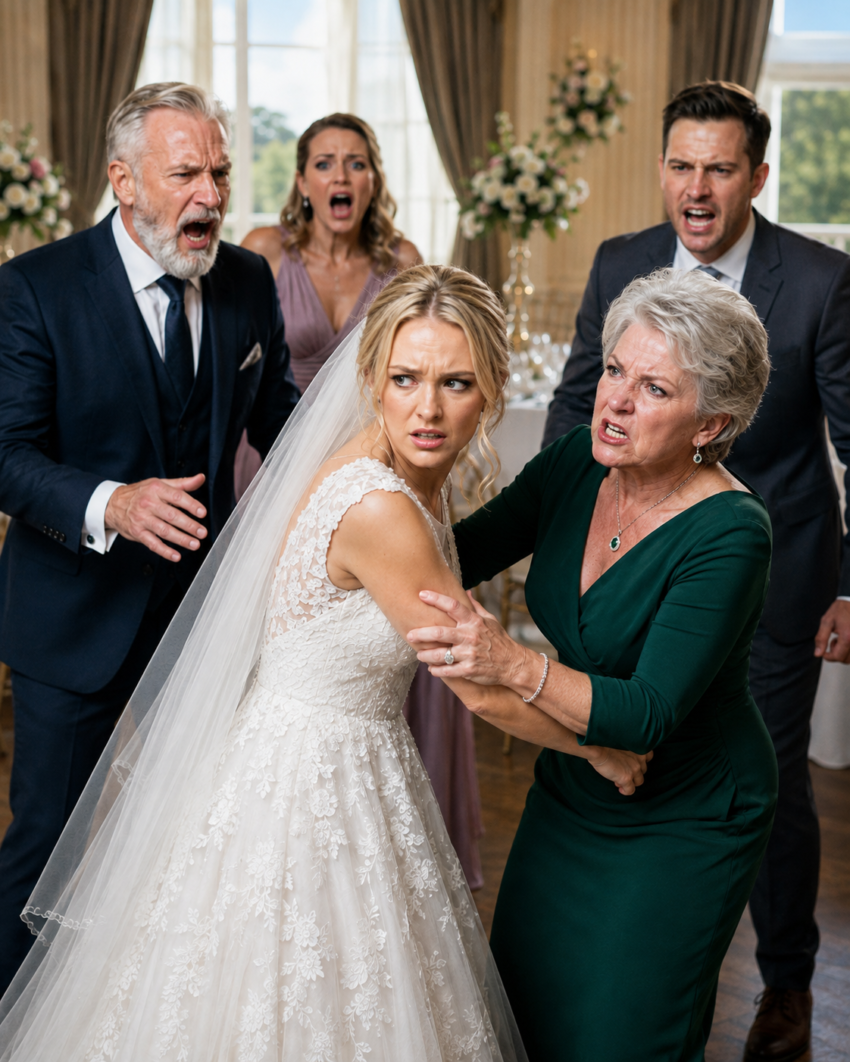
My Family Skipped My Wedding for My Brother—Then I Discovered What They Had Really Done With My Money
One hour before I was supposed to walk down the aisle, my brother sent me six words that changed the way I saw my family forever.
“Sorry, Tessa. Family priorities come first.”
I read the message twice while standing inside the bridal room of a small chapel outside Wilmington, North Carolina.
My parents were not coming.
My brother Bryce was not coming.
His wife, Hailey, was not coming.
Three months earlier, nearly every member of my family had traveled all the way to Key West, Florida, for Bryce and Hailey’s elaborate celebration announcing that they were expecting triplets.
But on my wedding day, they apparently could not manage a two-hour drive.
I did not argue.
I did not call them.
I walked down the aisle without them.
Twenty-five days later, my phone would be filled with hundreds of calls because I had quietly stopped doing something my family had depended on for years.
But at that moment, standing in my wedding dress and staring at an empty front row, I had no idea how much worse the truth was going to become.
The Empty Front Row
My name is Tessa Rowan, and for most of my adult life, I had been the dependable daughter.
The one who answered immediately.
The one who helped without asking too many questions.
The one who always found a solution when my family ran short.
My fiancé, Dean Mercer, understood this about me long before he asked me to marry him.
He also understood something I refused to admit.
My family did not simply appreciate my generosity.
They expected it.
That morning, Dean was already standing near the altar when I stepped out of the bridal room.
His eyes immediately moved toward the front row on my side.
Six reserved seats.
All empty.
He looked back at me, and I could see the concern on his face.
I gave him the smallest smile I could manage.
I had spent months imagining my father walking me down the aisle. My mother had promised to bring my grandmother’s pearl pin for my bouquet.
Instead, neither of them was there.
At 8:45 that morning, I had sent a message to our family group chat.
“The ceremony starts at ten. I saved the entire first row for you. Please tell me you’re already driving.”
Nothing.
At 9:03, Bryce finally replied.
“Hailey isn’t feeling well. Mom and Dad are staying with us today. Sorry, Tessa. Family priorities come first. Hope everything goes well.”
I stared at the last sentence.
Hope everything goes well.
He made my wedding sound like a dentist appointment.
Dean’s mother, Patricia, found me standing near the chapel doors.
She did not ask me to forgive anyone.
She did not tell me to stop crying.
She simply removed a delicate silver bracelet from her wrist and fastened it around mine.
Then she squeezed my hand.
“You are not walking into that room thinking something is missing,” she said softly. “Look at the people who showed up for you.”
I did.
Dean’s parents were there.
His sisters were there.
His cousins had driven through the night.
Friends from college had flown in from Chicago and Denver.
My side of the chapel was not empty.
Only the seats reserved for my family were.
I Walked Anyway
The coordinator offered to delay the ceremony.
I refused.
“No,” I told her. “Everyone who wanted to be here is already here.”
Dean’s father offered me his arm and walked beside me for the first half of the aisle.
Then I continued alone.
I remember the sound of my shoes against the wooden floor.
I remember the sunlight coming through the stained-glass windows.
And I remember realizing that I had spent years believing independence meant being able to rescue everyone around me.
Maybe independence meant something else.
Maybe it meant knowing when to stop.
Dean met me at the altar and whispered:
“I’m right here.”
Those four words were worth more than every excuse my family had sent me that morning.
The ceremony was small, warm, and beautiful.
At the reception, my phone buzzed once.
A message from Mom.
“Hope you had a lovely ceremony. Send pictures when you get time. Hailey is resting.”
No apology.
No explanation.
Not even a question about how I was doing.
I turned my phone off.
Then I went back to my husband.
The Account I Had Trusted Them With
Dean and I spent six quiet days in a mountain cabin near Asheville.
When we returned home, something kept bothering me.
It was not simply that my family had missed my wedding.
It was how easily they had done it.
For six years, I had helped my parents financially.
My father, Martin, had been forced to reduce his working hours after an injury. My mother, Joanne, worked part-time at a department store, but her income was inconsistent.
I started covering part of their mortgage.
Then their insurance.
Then occasional utility bills.
Eventually, I opened an emergency account that my parents could access if something urgent happened.
There had been one rule.
Emergency expenses only.
I rarely checked it because I trusted them.
That trust ended on the first Monday after our honeymoon.
I sat at our kitchen table, opened my laptop, and logged into the account.
The balance appeared.
I thought I had opened the wrong page.
My emergency savings had contained approximately $24,000.
Now it contained almost nothing.
I refreshed the screen.
Same number.
Then I checked the credit line connected to the account.
Nearly $33,000 had been charged.
Dean walked into the kitchen carrying two cups of coffee.
He stopped when he saw my face.
“Tessa, what happened?”
I turned the laptop toward him.
“I don’t know yet.”
Then I opened the transaction history.
Within minutes, I knew.
Luxury resort charges.
Private catering.
A boat rental.
A photography company.
Designer maternity clothing.
An expensive restaurant.
A jewelry store.
Nearly every charge came from the same week.
The week of Bryce and Hailey’s triplet celebration in Florida.
The Celebration I Had Actually Paid For
I could barely move.
For months, Bryce had told everyone he had received a large performance bonus.
My parents had praised him endlessly.
Dad had even said:
“Your brother is finally doing well enough to take care of everybody.”
Apparently, he had been taking care of everybody with my money.
Dean leaned over my shoulder.
“Who has access to this card?”
I opened the authorized-user section.
My parents were listed.
Then I saw another name.
Bryce Rowan.
I stared at it.
“I never added him.”
There was no confusion.
I remembered the bank paperwork clearly.
Adding another authorized person required my approval.
I had never given it.
Dean sat beside me.
“Then you need someone professional to look at this before you speak to your family.”
For once, I listened.
That afternoon, I contacted financial attorney Nathaniel Brooks, someone recommended by Dean’s employer.
I brought him six years of statements.
Mortgage payments.
Insurance transfers.
Emergency deposits.
Everything.
Nathaniel studied the documents for nearly an hour.
Finally, he folded his hands on the desk.
“You have been financially supporting several adults for a very long time.”
“I know.”
“Do you want to continue?”
The answer surprised me with how easily it came.
“No.”
I Quietly Removed Myself
I did not call my parents and threaten them.
I did not send Bryce an angry message.
I did not post anything online.
I simply began separating my finances from theirs.
Nathaniel helped me remove my personal guarantee from accounts where it was legally possible.
I stopped the automatic mortgage assistance I had been sending every month.
I discontinued payments on bills that were not mine.
The disputed credit charges were frozen while the bank reviewed how Bryce had been added.
I also withdrew my financial backing from the lease Bryce had once asked me to guarantee.
For years, my family had lived with an invisible safety net beneath them.
I was that safety net.
Now I was stepping away.
Nathaniel warned me:
“When these payments stop, they are going to notice quickly.”
I nodded.
“They didn’t notice when I stopped speaking to them. Maybe they’ll notice this.”
The first week passed quietly.
Then another.
Apparently, my parents were so accustomed to me managing everything that they ignored several financial notices.
On the twenty-fifth morning after my wedding, everything changed.
The Calls Began Before Breakfast
My phone started ringing shortly after seven.
Dad.
Mom.
Bryce.
Dad again.
Then the family group chat exploded.
By midmorning, I had more missed calls and messages than I could count.
Dad left the first voicemail.
“Tessa, call me immediately. Something changed with the mortgage payment, and the bank says you’re no longer connected to several accounts. We need you to fix this.”
Mom sent another.
“My payment information isn’t working. What is happening? Please call us.”
Bryce was less polite.
“You cannot suddenly walk away from everything because you’re upset about the wedding. Hailey and I have three babies coming.”
That sentence finally made me answer.
Not by phone.
By text.
I sent the account statement showing every Florida charge.
Then I wrote:
“I am not taking anything away from you. I have simply stopped paying for things that belong to other adults. And I am no longer accepting responsibility for money I did not authorize.”
For several minutes, nobody replied.
Then Dad called again.
This time, I answered.
His voice had changed.
“Tessa… why does this statement show Bryce’s name?”
I heard my brother in the background.
“Don’t listen to her. She’s twisting everything.”
I closed my eyes.
“Dad, the money you believed came from Bryce’s bonus came from my emergency savings and a credit line connected to my name.”
Silence.
Mom finally spoke.
“We thought Bryce paid for Florida.”
“I know.”
“We didn’t realize—”
“You didn’t ask.”
That ended the conversation.
Then I Questioned the Wedding-Day Emergency
After the call, I sat alone for several minutes.
Something still bothered me.
If Bryce had lied about the money, what else had he lied about?
Especially the wedding.
According to his message, Hailey had needed everyone with her that morning.
Yet something about the story had always felt too convenient.
Hailey loved posting her life online.
Restaurants.
Coffee shops.
Vacations.
Every milestone.
She had posted nothing from a medical center that day.
So I searched public location posts from the neighborhood where Bryce lived.
I nearly gave up.
Then I found a photograph uploaded by a stranger at an upscale brunch restaurant.
The picture showed a woman smiling beside a plate of waffles.
She was not important.
The background was.
Sitting several tables behind her were Bryce and Hailey.
Hailey looked perfectly comfortable.
Bryce was laughing.
The timestamp was 11:12 a.m.
I had been standing at my wedding altar at almost exactly that time.
My hands went cold.
There had been no emergency.
But I still did not understand why my brother had gone so far to keep my parents away.
Three days later, I learned the answer.
The Baby Shower Changed Everything
Bryce and Hailey had planned their baby shower months earlier at my parents’ house.
Despite everything happening with the bank, they did not cancel it.
Dean thought I should stay home.
I disagreed.
There were financial documents Bryce needed to sign acknowledging responsibility for the disputed charges.
I wanted the matter settled.
Dean drove with me.
When we arrived, pastel decorations covered the front lawn. Dozens of cars lined the street.
Inside, Bryce was preparing to give a toast.
Mom saw me first.
Her expression changed immediately.
“Tessa?”
Bryce lowered the microphone.
“Why are you here?”
I held up a leather folder.
“To finish something.”
He approached me.
“This is not the time.”
“You chose the time when you used an account attached to my name.”
The room became quiet.
I placed the documents on a table.
“These papers acknowledge that the charges you made are your responsibility. Sign them, and my attorney can continue resolving this through the proper financial process.”
Hailey stood up.
“Can we please not discuss this here?”
I looked at her.
Then I remembered the photograph.
“Actually, there is one more thing we should discuss.”
I opened the folder and removed the printed picture from the restaurant.
Dad took it from me.
He stared at it for several seconds.
“When was this taken?”
“My wedding day.”
Mom moved closer.
Her face went pale.
“But Hailey was supposed to be resting.”
Bryce said nothing.
Dad looked directly at him.
“You told us leaving the house would make things harder for her.”
Bryce’s face tightened.
“It was complicated.”
“No,” I said. “It wasn’t.”
Dad kept staring at him.
“Why did you tell us we couldn’t go to your sister’s wedding?”
Bryce finally snapped.
“Because if you went, you would have talked to Tessa!”
Nobody moved.
He immediately realized what he had admitted.
But it was too late.
“You might have mentioned Florida,” he continued more quietly. “She might have checked the account. I needed more time.”
Mom sat down.
The truth was suddenly simple.
My brother had not merely lied to me.
He had created a fake crisis because he was afraid one ordinary conversation at my wedding would expose what he had done.
I Finally Stopped Carrying Them
Bryce signed the documents that afternoon.
I left without shouting.
My parents asked me to reconsider helping them financially.
I refused.
Dad looked exhausted when he followed me toward the door.
“We may not be able to keep this house without your help.”
For years, that sentence would have terrified me.
I would have opened my banking app immediately.
This time, I did not.
“Then you need to make decisions based on what you can afford,” I said gently. “That is what Dean and I have always had to do.”
My parents eventually moved into a smaller apartment.
Bryce and Hailey downsized dramatically after losing the financial support they had taken for granted.
Their triplets arrived healthy, and I was genuinely grateful for that.
But I stayed out of the financial chaos that followed.
I had spent too many years confusing love with rescue.
The Letter That Arrived One Year Later
Almost a year after my wedding, Dean and I moved into our first house.
It was not enormous.
It did not need to be.
Every payment belonged to us.
Every room felt peaceful.
One afternoon, I found an envelope from my mother in the mailbox.
Inside was one handwritten page.
She wrote:
“Tessa, for months I told myself you had abandoned us. I understand now that you only stopped carrying responsibilities that were never supposed to be yours. Bryce made terrible choices, but your father and I made our own mistake by depending on you so completely that we stopped seeing what it was costing you. The part I regret most is your wedding. I should have been there. I cannot change that day, but I am deeply sorry.”
I read it twice.
Then I folded it and placed it inside my desk.
I did not immediately call her.
Forgiveness did not require pretending nothing had happened.
But I kept the letter.
Maybe because for the first time, my mother had apologized without asking me to pay for something afterward.
One Year After the Empty Seats
On our first anniversary, Dean and I drove back to the chapel.
There was no ceremony happening that afternoon.
We walked inside and stood quietly near the rear doors.
I looked toward the same front row that had broken my heart one year earlier.
Empty.
Dean slipped his hand into mine.
“You okay?”
I smiled.
“More than okay.”
A year earlier, I had looked at those seats and thought they represented everything I had lost.
Now I understood something different.
An empty seat is not always proof that you are unloved.
Sometimes it simply reveals who was never truly standing beside you.
I looked at Dean.
Then at the sunlight pouring through the windows.
I had spent years paying bills, fixing problems, covering shortages and quietly holding together people who rarely wondered what holding them together was doing to me.
Stopping did not make me cruel.
It allowed me to finally build a life that did not depend on being useful to everyone else.
For the first time in years, I was not anyone’s emergency plan.
I was simply Tessa.
A wife.
A homeowner.
A woman who had finally learned that love should never require you to disappear in order to keep everyone else comfortable.
Sometimes the most painful moment is not when people openly reject us, but when we finally realize that years of loyalty and sacrifice have quietly become something they believe they are entitled to receive forever.
Helping your family can be a beautiful expression of love, but when your generosity becomes an expectation rather than something appreciated, setting boundaries may be the healthiest gift you can give yourself.
The people who truly value you will not measure your importance by what you can pay for, fix, guarantee or provide; they will still choose to stand beside you when you have nothing material to offer them.
Walking away from an unhealthy responsibility does not mean you stopped caring about the people involved; sometimes it simply means you finally understood that adults must eventually carry the consequences of their own decisions.
Silence can reveal more than an argument because when you stop explaining, rescuing and repairing everything, you finally discover who reaches for you because they love you and who reaches for you only because they need something.
Trust is precious because money can often be earned again, but discovering that someone used your kindness while deliberately hiding the truth can permanently change the way you see a relationship.
An apology becomes meaningful only when it acknowledges the pain caused without demanding immediate forgiveness, financial help or a return to the same relationship that created the hurt in the first place.
Some empty seats hurt deeply at first, but with time we may understand that they created space for us to notice the people who were quietly present, dependable and loving when our lives became difficult.
Building a peaceful life sometimes requires disappointing people who benefited from your lack of boundaries, and their disappointment does not automatically mean that the boundary itself is unfair.
Your worth should never depend on how many problems you can solve for other people, because the right relationships will value your presence, your heart and your humanity long after you stop being the person who pays every bill and fixes every crisis.