PART 1 — THE TWENTY MINUTES MY CHILDREN GAVE ME
“You sold Dad’s farm for three million dollars, and you think you can keep every penny? You’ve got some nerve, Mom.”
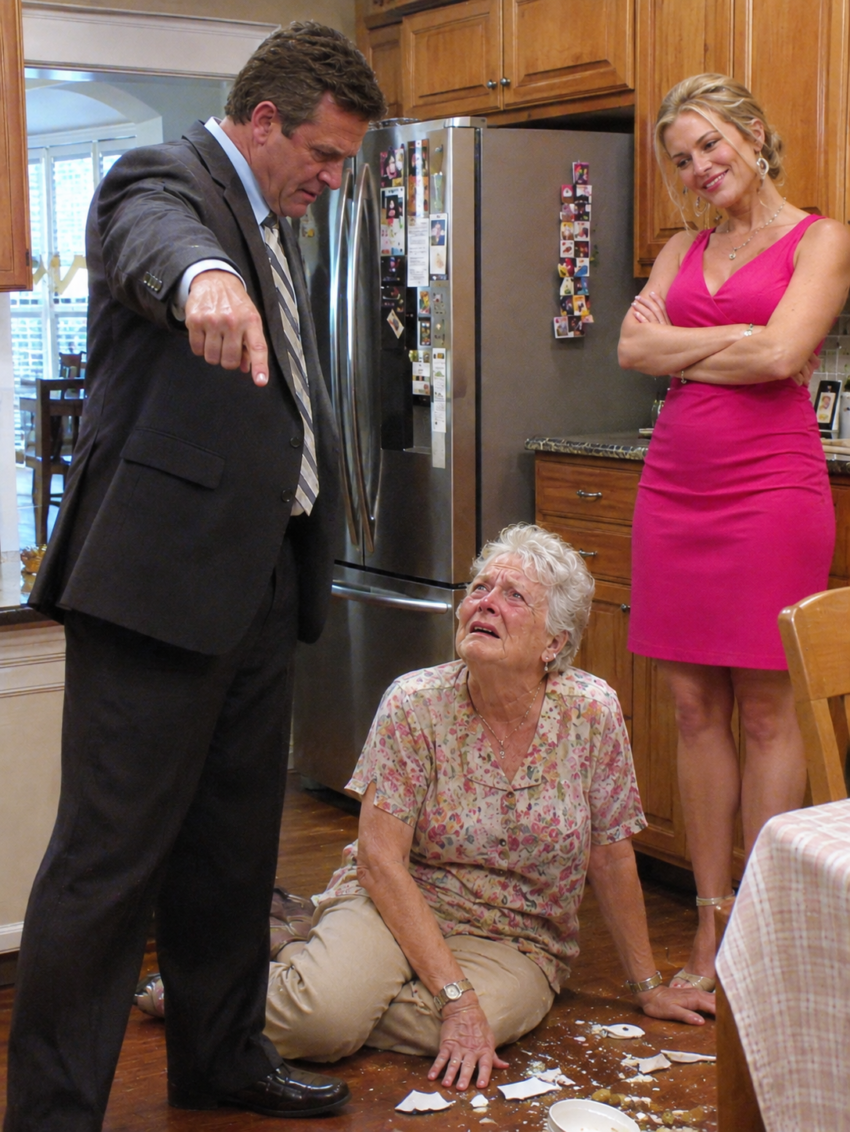
My daughter Rachel stood across the kitchen counter, her face red with anger. My oldest son, Marcus, had just placed a power of attorney in front of me, demanding that I sign it before they took me to the bank. When I refused, he grabbed my arm and shoved me against the counter hard enough to leave me struggling for breath.
But it wasn’t the pain that frightened me most.
It was the signature already printed at the bottom of the document. It looked like mine, except for one small detail that told me exactly where they’d gotten it.
And neither of my children knew about the camera above the pantry door.
My name is Evelyn Carter. I’m sixty-eight years old, and for most of my adult life, I lived on a farm outside Springfield, Missouri. My husband, Daniel, and I bought our first sixty acres in 1982, back when we were young enough to believe we could fix anything with hard work and a little patience.
We raised cattle, grew soybeans, and gradually bought neighboring parcels until the farm covered nearly eight hundred acres. We also raised two children there, although somewhere along the way, Rachel and Marcus decided the life that supported them wasn’t good enough.
Daniel passed away seven years ago. I kept the farm running with help from our longtime manager, Luis Mendoza, but eventually my knees and back made it clear that I couldn’t keep doing everything I’d done at forty.
Selling wasn’t an easy decision. By the time I signed the agreement, I’d spent nearly two years thinking about it.
My children, however, had needed only a few days to decide what should happen to the money.
“Three million dollars,” Rachel repeated, tapping the counter. “Do you have any idea what that would mean for us?”
“I know what it means, Rachel. I negotiated the sale.”
She rolled her eyes.
“Oh, don’t start acting like we’re stupid. Marcus understands these things better than you do.”
Marcus adjusted the cuff of his expensive jacket.
“We’re trying to protect you, Mom. You’re almost seventy, you’ve made a major financial decision, and you haven’t told either of us where the proceeds are going.”
“Because they’re my finances.”
“They’re family finances,” he replied. “That farm was Dad’s legacy.”
I looked at him.
“Your father and I owned that land together. He worked it, and so did I.”
Marcus gave a dismissive shrug.
“Nobody’s denying that. But you can’t expect us to sit quietly while you make decisions that affect our inheritance.”
“An inheritance is something you receive after somebody passes away, Marcus. I’m sitting right here.”
Rachel made an impatient sound.
“You know what he means. Stop twisting his words.”
I had heard that accusation often enough to recognize what came next. If I disagreed, I was difficult. If I asked questions, I was confused. If I refused to give them money, I was selfish.
Rachel was forty-one, divorced, and still recovering financially from a clothing boutique that had failed several years earlier. Marcus was forty-five and worked in commercial real estate, although lately his expensive clothes had been doing more work than his actual business.
I’d helped both of them repeatedly.
When Marcus lost his first job, I paid off his remaining student loans. When Rachel’s boutique closed, I covered several months of rent and helped her negotiate with creditors.
I never expected repayment. I simply wanted my children to get back on their feet.
Somehow, helping them had become the same thing as owing them.
“Just sign the paperwork,” Marcus said, sliding the document closer. “Then we can discuss how to distribute the money responsibly.”
“I haven’t agreed to distribute anything.”
“That’s why we’re here.”
I picked up the pages.
The document named Marcus as my financial agent and Rachel as his alternate. It granted broad authority over banking, investments, and property transactions.
I read the first page, then the second.
Marcus sighed.
“Mom, it’s standard language. I’ve handled dozens of these.”
“Then you won’t mind waiting while I read it.”
“You’re making this unnecessarily complicated.”
At the bottom of the final page, my name appeared in familiar handwriting.
Evelyn Carter.
The signature was a convincing copy, but the last letter had a long upward stroke I hadn’t used in years.
I knew that version of my signature.
It appeared on an old farm partnership agreement Daniel and I had signed before he became ill.
I looked up.
“Where did you get this?”
Marcus frowned.
“Get what?”
“My signature.”
Rachel glanced at her brother.
“It’s a draft, Mom.”
“Then why does it already have my signature?”
“It’s just a sample,” Marcus said. “Don’t turn this into some ridiculous accusation.”
I folded the pages carefully.
“I’m keeping this.”
He reached across the counter.
“Give it back.”
“No.”
His hand closed around my wrist.
“Stop being difficult.”
“Let go of me, Marcus.”
I pulled away, and he shoved me backward. My side struck the edge of the counter, knocking a ceramic bowl onto the floor. Apples rolled across the kitchen while I gripped the countertop, trying to catch my breath.
Rachel stood beside the refrigerator.
“Marcus, that’s enough.”
He stepped back, looking more irritated than ashamed.
“Then she needs to quit treating us like criminals.”
I pressed a hand against my ribs.
“You brought a document with a signature I didn’t put there.”
“We brought paperwork to help you,” Rachel snapped. “And look how you’re behaving.”
I stared at my daughter.
“You saw what he did.”
She looked away.
“You know how stressed he’s been lately. You didn’t have to push him.”
For several seconds, I couldn’t speak.
When Rachel was six, she’d fallen from her bicycle and scraped both knees. I’d carried her nearly half a mile home because she wouldn’t let anybody else touch her. When Marcus was twelve, I’d sat beside his hospital bed after he broke his leg playing baseball.
Now I was standing in my own kitchen, hurting, while my daughter explained why I’d brought it on myself.
Marcus checked his watch.
“You’ve got twenty minutes, Mom. Tell us where the money is, or we’re going to the bank and sorting this out ourselves.”
I looked at the clock above the stove.
“You can’t take money that doesn’t belong to you.”
“We’ll see about that.”
He pulled out a chair and sat down as though he’d come for a business meeting.
I glanced toward the pantry.
The little black camera above the door had been installed when I moved into the rental house. I’d kept the security system from the farm after a break-in several years earlier, then upgraded it to include online recording and an emergency alert button beneath the kitchen counter.
When Marcus grabbed my wrist, I’d pressed that button.
A silent confirmation light had flashed beneath the counter.
I didn’t know whether the monitoring company had contacted the authorities yet. I only knew that the recording was being preserved.
And I needed to keep my children talking without provoking another confrontation.
“Why are you in such a hurry?” I asked Marcus.
He leaned back.
“Because you’ve been avoiding us for weeks.”
“I spoke to Rachel on Sunday.”
“You talked about the weather and your back. You wouldn’t discuss the sale.”
Rachel crossed her arms.
“You wouldn’t even let me see the closing papers.”
“My attorney has those.”
Marcus laughed.
“That attorney again. You’ve been listening to strangers instead of your own family.”
“Samuel Reed isn’t a stranger. He’s my attorney.”
“And I’m your son.”
“Then start acting like it.”
His expression hardened, but he stayed seated.
Rachel moved toward the window.
“Dad would never have wanted this.”
I felt the familiar sting of hearing Daniel’s name used as an argument.
“Your father wanted the farm to stay productive. He didn’t want it divided into housing lots.”
Marcus scoffed.
“Here we go with the sentimental nonsense. Land is an asset, Mom. You can’t run a business on memories.”
“I know that better than you think.”
“Then why didn’t you sell to the developer I introduced you to?”
“Because I didn’t want to.”
“He offered more money!”
I looked at him carefully.
“You seem awfully concerned about that particular buyer.”
He hesitated.
“I’m concerned about you throwing away opportunities.”
Rachel stepped in.
“Marcus was trying to get you the best deal. You should’ve been grateful.”
I remembered the developer’s proposal. Marcus had pushed hard for it, insisting that the land was worth more as a residential development than as a working farm.
I’d declined after reviewing the offer with Samuel.
What Marcus hadn’t mentioned at the time was that he expected a substantial referral fee if the transaction went through.
Samuel had discovered that during his review.
“How much would you have received if I’d sold to your developer?” I asked.
Marcus’s expression changed.
“That’s none of your business.”
“It was my land.”
“It was a legitimate business arrangement.”
“Then why didn’t you tell me?”
Rachel turned toward him.
“What fee?”
He waved a hand.
“It’s irrelevant. That deal never happened.”
But Rachel kept looking at him.
“You told me you weren’t making anything from the sale.”
“Rachel, not now.”
I watched them.
They’d arrived together, speaking as though every demand had been agreed upon. Yet Rachel apparently hadn’t known her brother had expected to profit from the developer’s offer.
I wondered what else he hadn’t told her.
“Did Marcus tell you about the offer I made three years ago?” I asked.
Rachel frowned.
“What offer?”
“The one to take over the farm.”
Marcus stood.
“We’re not discussing that again.”
“I offered both of you the chance to purchase it over time. No down payment, twenty years to pay, and one season working alongside Luis so you’d understand the operation.”
Rachel gave a short laugh.
“You wanted us to move out there and work like farmhands.”
“I wanted you to know what you were buying.”
“I had a business in Kansas City.”
“And Marcus had his career. You both said no. I respected that.”
Marcus looked at his watch again.
“Ten minutes.”
I glanced at the document lying beside the fruit bowl’s broken pieces.
The signature still bothered me.
Not because it was a convincing imitation, but because I knew exactly which document it came from.
That partnership agreement had been stored in a locked filing cabinet at the farm. I’d kept it with our original deed, old tax records, and Daniel’s estate papers.
Only a handful of people knew where it was.
“Rachel,” I said, “did you go through my filing cabinet before I moved out of your house?”
She looked startled.
“What?”
“The cabinet in the guest room. The one you said was taking up too much space.”
“I moved some boxes. So what?”
“Did you open the cabinet?”
She glanced at Marcus.
That was answer enough.
“He told me you needed help organizing your paperwork,” she said.
Marcus turned sharply.
“Rachel, stop talking.”
“You said Mom had forgotten where she kept important documents!”
I felt a chill.
“Marcus, what exactly have you been telling people about me?”
He looked away.
“Nothing that isn’t true.”
Rachel’s face had gone pale.
“You told me the lawyer was worried about her memory.”
I stared at my son.
“Samuel has never expressed concern about my memory.”
Marcus shrugged.
“You forget things all the time.”
“Like what?”
He didn’t answer.
I remembered a conversation from several weeks earlier. Rachel had insisted I couldn’t remember where I’d put my bank statements, although I’d told her they were in the filing cabinet. Marcus had later suggested that I let him manage my bills.
At the time, I’d thought they were simply being overbearing.
Now I wondered whether they’d been preparing an argument that I couldn’t manage my own affairs.
“You took my old paperwork, copied my signature, and told your sister I was losing my memory,” I said quietly.
Marcus stood again.
“You’re making things up.”
“Then explain why my signature is on that document.”
He reached for the papers.
I placed my hand over them.
“Don’t.”
Rachel looked between us.
“Marcus, you said she was going to sign willingly.”
“She was supposed to.”
“You told me Samuel had already approved everything.”
I looked at my daughter.
“He hasn’t.”
Marcus slammed his palm against the table.
“Enough. We’re done talking.”
He reached for my phone, which lay beside the coffee maker.
I moved it into my cardigan pocket.
“Leave it alone.”
“You’re coming to the bank with us.”
“No.”
He stepped closer.
“Mom, don’t make me ask again.”
I backed toward the pantry.
From outside came the sound of a car door closing.
Marcus stopped.
Then another door closed.
Rachel moved toward the window and lifted the curtain.
Her face changed.
“Marcus,” she whispered, “there are police cars in the driveway.”
He turned toward me.
“What did you do?”
I kept one hand pressed against my aching side.
“I made sure somebody would know what happened in this kitchen.”
PART 2 — THE FARM THEY COULD NEVER TAKE
Marcus stared at the pantry camera, then at the document on the counter.
For the first time that morning, he looked genuinely frightened.
“You recorded us?”
“The security system records whenever someone enters the kitchen.”
Rachel stepped away from the window.
“Mom, please. You can’t let the police think we came here to hurt you.”
I looked at the apples scattered across the floor.
“Then tell them why I’m having trouble breathing.”
Before she could answer, someone knocked firmly on the front door.
“Sheriff’s office. Mrs. Carter, are you alright?”
Marcus took a step toward me.
“Don’t say anything until we’ve talked.”
I looked directly at him.
“We’ve talked enough.”
I called out that I needed help.
Two deputies entered after I opened the door. One approached me while the other asked Marcus and Rachel to step away from the kitchen counter.
Marcus immediately began explaining.
“Officer, this is a family disagreement over my mother’s finances. She’s confused about a document, and things got a little heated.”
The deputy glanced at me.
“Mrs. Carter, can you tell me what happened?”
“My son grabbed me and shoved me against the counter. My side hurts, and I need medical attention.”
Rachel interrupted.
“He didn’t mean to hurt her. Mom was refusing to listen, and—”
“Ma’am,” the deputy said, “I’ll speak with you separately.”
Marcus pointed at the document.
“She’s been making irresponsible decisions. We’re trying to protect the family property.”
“Sir, step into the hallway with my partner.”
He looked toward me.
“Mom, tell them I’m not dangerous.”
I remembered the look on his face when he’d grabbed my wrist.
“I told them what happened.”
An ambulance arrived a few minutes later. The paramedic examined my side and recommended hospital X-rays.
While she worked, a deputy asked whether the security camera had captured the confrontation.
I gave him the monitoring company’s information and explained that the recording was stored online.
Marcus heard me.
“You can’t use that. You recorded us without telling us.”
The deputy didn’t argue with him.
“We’ll determine what evidence is available and handle it through the investigation.”
Rachel sat at the kitchen table, crying quietly.
“Mom, please don’t let this ruin our family.”
I looked at her.
“Rachel, I was hurt in front of you. You didn’t even ask if I was alright.”
She covered her face.
“I didn’t know what to do.”
“You could’ve told your brother to stop. You could’ve called for help.”
She didn’t answer.
As the paramedics helped me toward the ambulance, I heard Marcus arguing with a deputy in the hallway.
“She’s almost seventy. She doesn’t understand what she’s signed. You need to speak with her attorney.”
I stopped.
“You can speak with Samuel Reed,” I said. “He’s the attorney I hired, and he’ll confirm that I made my decisions myself.”
Marcus looked at me.
“You think that proves anything?”
“I think it proves I don’t need you speaking for me.”
The deputy guided me outside.
I was taken to the hospital, where X-rays showed a fractured rib. The doctor explained that it would take several weeks to heal and gave me instructions for managing the pain.
Samuel arrived that afternoon carrying his familiar brown leather folder.
He sat beside my bed and listened while I explained what had happened.
“Evelyn, I’m sorry,” he said. “I knew they were pressuring you, but I didn’t expect this.”
“Neither did I.”
He opened the folder.
“The sheriff’s office contacted me about the document. I’ve confirmed that I didn’t prepare or approve it. They’re examining the signature and the circumstances surrounding it.”
I nodded.
“Marcus has been telling people I’m losing my memory.”
Samuel looked up.
“Who has he told?”
“Rachel, for one. And apparently he told her you’d expressed concerns.”
Samuel’s expression hardened.
“That’s false. You’ve been clear and consistent throughout the sale. We discussed your options repeatedly, and every decision was documented.”
I looked at the ceiling.
“He wanted me to believe I couldn’t trust myself.”
Samuel closed the folder.
“That’s why I’m glad you insisted on independent advice.”
For months, Marcus had argued that I was too old to manage the farm sale. He’d suggested that I was forgetful, that I was making emotional decisions, and that I should let him handle everything.
I’d begun questioning myself, especially on days when my back hurt and I couldn’t remember where I’d left my glasses.
But forgetting a pair of glasses wasn’t the same thing as being unable to make decisions.
And refusing to give my children money wasn’t evidence of confusion.
“What happens to the farm now?” I asked.
“The closing is scheduled for next week. We can postpone it if you need more time.”
I shook my head.
“No. I want to finish what Daniel and I started.”
Samuel studied me.
“You’re certain?”
“I’ve never been more certain.”
The next morning, my sister Clara arrived from Oregon.
She was sixty-one, sharp-eyed, and considerably less patient with my children than I’d ever been.
After hugging me carefully, she sat beside the hospital bed.
“Why didn’t you tell me things had gotten this bad?”
“I thought I could handle it.”“Evelyn, you’ve spent your whole life handling everybody else’s problems. Maybe it’s time somebody helped you.”
I smiled despite the pain in my side.
“You sound like Daniel.”
“He was right about a few things.”
Clara stayed with me after I was discharged. She helped me arrange follow-up appointments and insisted I stop answering every call from Rachel.
My daughter left several messages.
At first, she was angry.
“Mom, you’ve made a terrible mistake. Marcus could lose his career because of this.”
Then she sounded frightened.
“Please call me. We need to talk before everything gets worse.”
By the fourth day, her voice had changed.
“I didn’t know he was going to hurt you. I swear I didn’t. I just wanted you to listen to us.”
I listened twice.
Then I saved the message and put my phone away.
I wanted to believe Rachel regretted what had happened. But I also remembered her standing in my kitchen, telling me I’d pushed Marcus too far.
A week later, Samuel called with the news I’d been waiting for.
The farm sale had closed.
The agricultural cooperative led by Luis Mendoza had completed the purchase for three million dollars. After closing costs and adjustments, the proceeds were distributed according to the financial and estate arrangements Samuel and I had prepared.
The trust I’d established would provide income for my retirement and support agricultural scholarships and assistance for older farmers.
The money wasn’t hidden.
It was simply no longer available for my children to demand.
Luis called that evening.
“Mrs. Carter, I don’t know how to thank you.”
I was sitting on Clara’s porch with a blanket over my knees.
“You don’t have to thank me, Luis. You and your family worked that land for more than twenty years.”
He was quiet for a moment.
“Daniel would’ve been happy to see this.”
I looked toward the trees.
“I hope so.”
“The crew wants you to come back for the first planting next spring. Coffee and breakfast in the equipment shed. Nothing fancy.”
I smiled.
“You know I never needed anything fancy.”
After we hung up, I sat there remembering Daniel.
He’d loved that farm more than any place on earth. He’d also loved our children, even when they disappointed him.
Near the end of his life, he’d told me we needed to stop rescuing Rachel and Marcus every time they made a poor decision.
I’d promised we’d talk about it when he felt stronger.
We never got the chance.
Now I understood what he’d been trying to tell me.
Two weeks after the closing, Rachel asked to meet.
I agreed, but only at Samuel’s office, with him present.
She arrived wearing a plain gray sweater, her hair pulled back, and a tissue clutched in one hand.
She looked tired.
“Mom, I don’t know how to fix this.”
I looked at her.
“I don’t either.”
Her eyes filled.
“I never wanted you to get hurt.”
“Then why didn’t you help me when it happened?”
She looked down.
“I was afraid of Marcus.”
“You weren’t afraid to demand my money.”
She flinched.
“That’s not fair.”
“Rachel, I was standing in my own kitchen, holding my side because your brother had hurt me. You told me I’d made him angry. You didn’t ask if I needed a doctor.”
She covered her face.
“I know. I’ve thought about it every day.”
I waited.
After a moment, she lowered her hands.
“Marcus told me you were making decisions you didn’t understand. He said the lawyer was taking advantage of you.”
“And you believed him?”
“I wanted to. I thought if we got control of the money, we could straighten everything out.”
I studied her.
“Straighten out what?”
She hesitated.
“My debts. Marcus’s business problems. Everything.”
There it was.
For months, they’d told me they were worried about my future. But the future they were trying to protect was their own.
“Did Marcus tell you about the commission he expected from the developer?” I asked.
Rachel shook her head.
“Not until that morning. He said he was helping you get a better price.”
“He stood to make money if I accepted that offer.”
She looked toward Samuel.
“Is that true?”
Samuel nodded.
“We reviewed the proposed transaction. The referral arrangement was one reason Evelyn wanted independent advice.”
Rachel stared at the table.
“He told me the cooperative was taking advantage of you.”
“The cooperative paid the agreed price. I chose them because I wanted the land to remain a working farm.”
She wiped her cheeks.
“I thought you were giving away everything Dad worked for.”
“Your father and I worked for it together.”
Rachel nodded slowly.
“I know.”
I wasn’t sure she did, but for once she didn’t argue.
Then she looked up.
“So there’s nothing for us?”
The question hurt more than I expected.
Even after everything, money was still the first thing she wanted to understand.
“I’ve made my financial arrangements,” I said. “I’m not discussing them with you. And I’m not giving either of you money to make this situation go away.”
She stared at me.
“You really mean that.”
“Yes.”
“What about Marcus?”
“He’ll have to deal with the consequences of his decisions. I’m not paying his legal bills, and I’m not changing my account of what happened.”
Rachel began crying again.
I wanted to reach across the table. I wanted to tell her everything would be alright, the way I had when she was little.
But I couldn’t make that promise.
“Rachel, I love you. That hasn’t changed. But I can’t keep protecting you from the consequences of your own choices.”
She looked at me for a long moment.
“I don’t know if you’ll ever forgive us.”
I took a breath.
“Neither do I. That’s going to take time, and it won’t happen because you ask me to forget.”
When the meeting ended, she stood slowly.
“Can I call you sometime?”
“You can. But I may not answer right away.”
She nodded.
For the first time, she accepted an answer she didn’t like without trying to change it.
Over the following months, I heard little from Marcus. His attorney handled the criminal proceedings, and I followed the case through the proper channels.
I didn’t try to influence the outcome.
I didn’t make excuses for him.
Rachel sent occasional messages asking how I was feeling. Sometimes I answered. Sometimes I waited.
I wasn’t trying to punish her. I was learning that loving my children didn’t require me to surrender every boundary I set.
By spring, my rib had healed enough for me to travel comfortably.
Clara drove me back to Missouri for the cooperative’s first planting season.
The farm looked almost exactly as it had when Daniel was alive.
The white farmhouse still stood beside the gravel drive. The old equipment shed had a fresh coat of paint, and the fields stretched toward the tree line beneath a pale morning sky.
Luis met us near the barn.
“Mrs. Carter, you made it.”
“I told you I would.”
He smiled and offered me his arm as we walked toward the shed.
Several families had gathered for breakfast. Children ran between picnic tables while their parents drank coffee from paper cups.
Luis showed me the cooperative’s plans for the coming year. They were investing in irrigation improvements, repairing an old tractor, and training two young employees who hoped to manage farms of their own someday.
I listened carefully.
For the first time in years, I wasn’t responsible for deciding how every dollar would be spent.
And I found I didn’t miss that responsibility nearly as much as I’d feared.
After breakfast, Luis walked with me toward the farmhouse.
“There’s something I wanted you to see,” he said.
He opened the door to the old kitchen.
The room had been cleaned and repainted, but the oak table Daniel built during our first winter was still there.
On the wall beside the pantry hung a framed photograph of Daniel and me standing in our first field, back when the farm was only sixty acres.
Underneath was a small brass plaque.
Daniel and Evelyn Carter — With Gratitude for Forty Years of Stewardship.
I stood in front of it for a long time.
Luis waited without speaking.
Finally, I touched the edge of the frame.
“Daniel hated having his picture taken,” I said.
Luis laughed softly.
“He complained the whole time we were putting it up.”
I smiled through my tears.
Before leaving, I asked Luis whether I could sit at the kitchen table for a few minutes.
He nodded and stepped outside.
I lowered myself into the familiar chair and looked around the room. The walls were a different color, and somebody had replaced the old curtains. But the morning light still fell across the table in the same place.
I thought about Rachel and Marcus, about the years I’d spent trying to make their lives easier, and about how frightened I’d been to tell them no.
Then I thought about the families outside preparing for another planting season.
The farm had changed hands.
It hadn’t disappeared.
I took a small photograph of Daniel from my purse and placed it beside the framed picture on the wall. It was one Clara had found while helping me sort through our belongings.
In it, Daniel was laughing beside our first tractor, his shirt sleeves rolled up and his boots covered in mud.
I straightened the photograph, picked up my purse, and walked toward the door.
Outside, Luis was waiting beside Clara’s car.
“Everything alright, Mrs. Carter?”
I looked back at the farmhouse one last time.
“Yes, Luis. Everything’s alright.”
Then I closed the door gently behind me and left the kitchen to the people who would fill it with their own memories.