PART2:
“Baseball. Old country music. Apparently terrible coffee.”
“I can work with all three.”
She hesitated.
“And Marcus?”
“Yeah?”
“He has dementia.”
I nodded.
That did not scare me.
My mother had died with vascular dementia.
I knew what it could look like.
Good days.
Bad days.
Faces disappearing.
Names sliding loose.
One minute 2024.
Next minute 1952.
You learn quickly not to fight somebody back into a present that frightens them.
I knocked on Frank’s door.
A thin voice said:
“Come.”
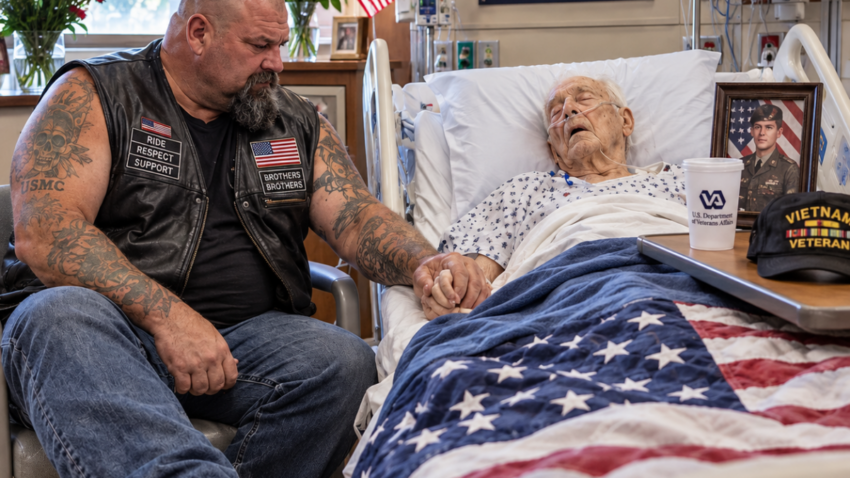
He was sitting upright by the window.
Tiny man compared to me.
Maybe one hundred thirty pounds.
White hair combed straight back.
A blue VA blanket over his legs.
Oxygen line beneath his nose.
Hands thin enough that veins looked drawn beneath skin.
He turned.
Saw me.
And his whole face changed.
I still remember that.
The room did not change.
The light did.
At least it felt like it.
His eyes widened.
His mouth opened.
Then he smiled so hard his cheeks trembled.
“Tommy.”
I stopped.
Frank pushed himself forward.
“Tommy.”
His voice cracked.
“You came.”
Something in my chest moved.
My name is Marcus Hale.
Not Tommy.
I had never seen Frank Delaney before.
I should have said:
No, sir. I’m Marcus. I’m a volunteer.
I even opened my mouth.
Then Frank started crying.
Real tears.
Not confusion.
Not agitation.
Relief.
Like a man had been waiting forty years at a station and finally saw the train.
“You came back.”
He held out both hands.
And I heard myself say:
“Yeah.”
Frank nodded over and over.
“Yeah, Dad.”
The second word came easier than it should have.
“I came.”
He pulled me into him.
I am not a small man.
Frank was fragile enough that I was afraid to hug back.
But he wrapped both arms around my waist and buried his face against my vest.
His shoulders shook.
“I knew you would.”
I stood there with one hand hovering above his back.
Then I lowered it.
Held him.
He cried for maybe thirty seconds.
Maybe three minutes.
I have no idea.
Time gets strange around grief.
When he finally let go, he wiped his face with the heel of his hand.
“Look at you.”
I smiled.
“Look at me.”
“You got big.”
“I guess I did.”
“You always hated vegetables.”
I laughed.
“I still do.”
“That’s your mother’s fault.”
“Probably.”
He grinned.
We sat.
And for the next forty minutes, Frank told me about my childhood.
Apparently I had broken my arm falling out of an apple tree at eleven.
Apparently I had hidden a stray dog under my bed for three days.
Apparently I hated piano lessons.
Apparently I once stole five dollars from Frank’s wallet to buy a baseball glove and then confessed before he noticed.
None of those things happened to me.
But I listened.
I nodded.
Sometimes I asked questions.
“What kind of dog?”
“Ugliest mutt I ever saw.”
“What happened to him?”
“Your mother let you keep him.”
“Of course she did.”
Frank laughed.
For forty minutes, he was alive in a way I had not expected.
Not merely breathing.
Alive.
When I finally stood, his hand shot out.
“You leaving already?”
“I’ll come back.”
“When?”
That question hit hard.
“Soon.”
“You promise?”
I looked at him.
“Yes.”
“I promise.”
His shoulders settled.
“Okay.”
When I stepped into hallway, Nurse Julie Bennett was waiting.
Mid-fifties.
Dark blue scrubs.
Hair clipped up.
She had the expression medical people get when they are deciding how gently to tell you something painful.
“He thinks I’m his son.”
“I know.”
“Tommy.”
She nodded.
“How long has he been doing that?”
“Not with anyone.”
I looked back toward room.
“What?”
“He asks for Tommy.”
“He talks about Tommy.”
“But you’re first person he’s called Tommy in months.”
“Who is Tommy?”
Julie glanced down hall.
“His son.”
“Where is he?”
Her eyes softened.
“Tommy died in 1983.”
That stopped me.
“How?”
“Car accident, from what I understand.”
I looked through partially open door.
Frank was smiling to himself.
“Should I correct him?”
Julie watched too.
Then:
“Would it matter?”
I frowned.
She continued.
“Frank has been declining.”
“Stopped eating much.”
“Doesn’t sleep well.”
“Gets agitated at night.”
“For three weeks he’s been asking whether Tommy knows he’s here.”
“We redirect.”
“We reassure.”
“Sometimes it helps.”
“Usually not.”
She looked at me.
“That is first time I’ve seen him smile like that in a long time.”
I put hands in vest pockets.
“So I just lie?”
“I didn’t say that.”
“What are you saying?”
“I’m saying dementia care isn’t always about forcing factual correction when correction only recreates grief.”
I knew that.
My mother.
Still, different when you are the false fact.
Julie said:
“You decide what you’re comfortable with.”
I looked again.
Frank was drinking the terrible coffee I had brought.
He raised cup toward empty doorway as if to toast someone.
“Would he forget if I told him?”
“Maybe.”
“Would he remember?”
“Maybe.”
“That’s helpful.”
Julie smiled sadly.
“Welcome to dementia.”
I rode home thinking about him.
The next Thursday I returned.
I told myself I would introduce myself correctly.
Marcus.
Volunteer.
Friend.
No pretending.
I walked into Room 214.
Frank lit up.
“Tommy.”
And I said:
“Hey, Dad.”
That was how it began.
At first I came once a week.
Then twice.
Then three times.
Mondays.
Thursdays.
Saturdays.
My club president, Danny Ruiz, noticed.
“You’ve got a girlfriend at VA?”
“Eighty-seven-year-old Korean War vet.”
“Your type is getting specific.”
“Shut up.”
“What’s his name?”
“Frank.”
“Family?”
“Not really.”
Danny became serious.
“You okay?”
“Fine.”
“You always say fine before something becomes my problem.”
“I’m fine.”
I brought Frank things I imagined Tommy might have liked.
Old Sports Illustrated magazines.
A Cincinnati Reds cap because Frank remembered Tommy loving the Reds.
A model Ford Mustang after hearing three separate stories about Tommy’s first car.
Johnny Cash CDs.
Peanut brittle that Julie confiscated because Frank had trouble swallowing.
He was furious.
“You used to be fun.”
“So did you.”
He laughed.
One afternoon he handed me an imaginary wrench.
“Hold that.”
I held air.
He spent twenty minutes fixing a carburetor that was not there.
I passed invisible tools.
He told me:
“You still tighten everything too damn much.”
“Maybe you under-tighten.”
“Smart mouth.”
“Learned it somewhere.”
He stared at me then.
For a second, something changed.
His eyes focused.
Really focused.
“You always did.”
Then it vanished.
He started telling me about a fishing trip.
I began learning Tommy through Frank.
Tommy had wanted to be a musician.
That came up often.
At first only little pieces.
“He was always banging on something.”
“Your mother bought you that guitar.”
“You played too loud.”
“Neighbors complained.”
“You had no respect for decent people sleeping.”
Sometimes Frank would say “you.”
Sometimes “Tommy.”
Sometimes he would look at me as if he knew I was neither and was simply grateful somebody stayed.
The staff noticed changes.
He ate more when I came.
Three bites became half a tray.
He started shaving.
Asked for clean shirt.
Slept longer after visits.
A social worker told me:
“You’ve given him something to orient toward.”
I did not know whether that was good or dangerous.
“What happens when I’m not here?”
“He asks when you’re coming.”
That answer sat heavy.
So I came more.
My bike became familiar outside hospice entrance.
One security guard joked:
“You work here now?”
“Pay terrible.”
“Benefits?”
“Coffee.”
“Then definitely terrible.”
Frank began waiting by window on Saturdays.
I learned that from Julie.
She said:
“You realize he recognizes your motorcycle sound.”
“No.”
“He does.”
“The minute you turn into lot, he starts watching door.”
That bothered me more than it should have.
Because once somebody waits for you, leaving has weight.
By the second week, I knew things about Frank nobody had told me.
He had landed in Korea at nineteen.
Froze two toes so badly he lost feeling in them.
Drove supply trucks.
Saw combat, though he minimized.
Married Evelyn Delaney in 1957.
She died 2006.
Tommy was their only child.
Born 1960.
Loved music.
Bad at baseball.
Good at fixing radios.
Frank would smile when talking about him.
Then sometimes his face went dark.
“What happened?”
I asked once.
“To what?”
“Your face.”
“Nothing.”
“Dad.”
The word still felt strange.
He looked out window.
“You left.”
There it was.
“I did?”
“You left.”
He did not say more.
I did not push.
Later Julie found me vending-machine coffee.
“You asked about Tommy?”
“A little.”
She hesitated.
“You should know something.”
“Okay.”
“Frank carries a lot of guilt.”
“About accident?”
“He has never told me details.”
“But when he has lucid days, he says he and Tommy were estranged.”
“How long?”
“I don’t know.”
I looked at paper cup.
“You think me pretending makes that worse?”
“I think Frank is dying.”
That cut through.
“What does that mean?”
“Heart failure.”
“Kidneys declining.”
“Cancer suspicion too, but at this point nobody is chasing diagnoses aggressively.”
“How long?”
Julie gave the answer nurses give when there is no answer.
“Could be weeks.”
“Could be months.”
I started coming daily.
Not because schedule.
Because weeks.
The club covered rides.
I missed two meetings.
Danny stopped teasing.
One Saturday, three of my brothers came with me.
I told them beforehand:
“He thinks I’m Tommy.”
Bear grinned.
“You finally got adopted by somebody old enough to handle you.”
“Do not correct him.”
Nobody did.
We entered.
Frank looked at Bear.
“Who’s this?”
I said:
“Friend.”
Frank stared at patches.
“Motorcycle gang?”
Bear opened mouth.
I cut him off.
“Club.”
Frank narrowed eyes at me.
“You always did make bad choices.”
Bear laughed so hard he had to leave room.
Later he said:
“I like your dad.”
“He’s not my dad.”
Bear looked back through door.
“I know.”
Then softer:
“Does he?”
“I don’t know.”
Third week, Frank had a bad night.
Confused.
Pulled oxygen.
Called for Evelyn.
Thought hospital was military barracks.
I sat until two a.m.
He gripped my hand.
“Tommy?”
“Here.”
“Don’t leave.”
“I’m not.”
“You mad at me?”
My throat tightened.
“No.”
“Promise?”
“Promise.”
“I shouldn’t have said it.”
“What?”
He closed eyes.
“You know.”
Then slept.
I stayed.
Something was happening to me during those nights.
I did not understand yet.
I had gone in believing I was giving Frank a kindness.
A dying old man mistakes stranger for son.
Stranger lets him.
Simple.
But every time he asked:
“Are you mad?”
“Did you forgive me?”
“Did I ruin everything?”
Something in me answered before my mouth.
Because I knew those questions.
Not from Frank.
From my own life.
My father’s name was Walter Hale.
He had been dead six years.
I did not visit his grave.
I did not talk about him.
If somebody asked:
“Were you close?”
I said:
“Complicated.”
Complicated is what men say when truth hurts.
My father and I had loved each other badly.
That is the simplest version.
He was a machinist.
Union guy.
No tattoos.
No motorcycles except one Honda he owned for eleven months before my mother made him sell it.
He believed in steady jobs, clean lawns, paid mortgages, and not embarrassing your family.
I believed in motorcycles, Army, wandering, tattoos, and learning consequences personally.
We fought when I was young.
Less when I got older.
Then at fifty-three, I joined Iron Horse Guardians more seriously after retirement from a fabrication plant.
We escorted funerals.
Visited veterans.
Raised money.
My father saw leather.
Patches.
Long-haired guys.
One member with old felony.
And decided:
gang.
We had our final real fight at McCluskey’s Bar.
Ten years before Frank.
I was fifty-three.
Dad was seventy-seven.
He asked me to meet for a drink.
Started civil.
Baseball.
My sister’s kids.
Then:
“I heard you’re spending every weekend with that motorcycle crowd.”
I sighed.
“Here we go.”
“I’m asking.”
“No. You’re judging.”
“I know what those clubs are.”
“No, you don’t.”
“I read.”
“You read newspaper.”
“They’re criminals.”
“Some clubs.”
“Your people look no different.”
I put beer down.
“You know what we did Saturday?”
“I don’t care.”
“We escorted body of twenty-six-year-old Marine from airport to funeral home because his mother asked.”
Dad looked away.
“You know what we did month before?”
“Marcus.”
“Raised eleven grand for veteran whose house burned.”
“I’m talking about your life.”
“So am I.”
“You’re wasting it.”
There it was.
“You spent thirty years working.”
“You had pension.”
“You could travel.”
“Do something respectable.”
“Respectable to who?”
“People.”
“What people?”
“Your family.”
I laughed bitterly.
“You care more what neighbors think than whether I’m happy.”
“That is childish.”
“And you’ve spent my whole life trying to turn me into version you can brag about.”
Dad stood.
“You want to throw your life away on motorcycles and tattoos, fine.”
His face red.
“But don’t expect me to watch.”
I stood too.
“Then don’t.”
He left.
I stayed.
Drank until bar closed.
We did not speak for three years.
Dad called sometimes.
I did not answer.
My sister tried.
I told her:
“He knows what he said.”
At Christmas, we sent cards.
No phone.
No visits.
Eventually my mother? She had died earlier maybe. Let’s establish Mom died before fight perhaps 12 years prior. So no mediator.
Three years later Dad showed up at my house.
No warning.
He stood porch.
Older.
Smaller.
“Can we not do this anymore?”
I should have hugged him.
Instead I said:
“What exactly are we doing?”
That was me.
Always make people define first.
He sighed.
“Fighting.”
“We’re not fighting.”
“We’re not anything.”
That landed.
We began speaking again.
Polite.
Birthdays.
Thanksgiving at sister’s.
Weather.
Health.
Car repairs.
Never McCluskey’s.
Never club.
Never:
I’m sorry.
Never:
I forgive you.
Never:
I love you.
Three years later, at two in morning, my sister called.
“Marcus.”
I heard crying.
“Dad?”
“Heart attack.”
“Where?”
“St. Joseph.”
“I’m coming.”
I drove ninety miles.
Too late.
He died before ambulance reached hospital.
I stood beside body.
Touched hand.
Cold already.
And realized our last real conversation had been that fight.
Everything afterward was noise.
Weather.
Football.
Doctor appointments.
Noise around the sentence we never finished.
I buried him.
Then buried conversation.
Six years.
Until Frank called me son.
Week four, I walked into Room 214 and knew the end had entered.
You can feel it.
People become smaller.
Not physically only.
The room turns quieter around them.
Frank was awake.
Eyes open.
Oxygen higher.
Skin pale.
Machines slower.
Julie met me at door.
“Rough night.”
“How rough?”
She looked.
I understood.
I sat.
Frank turned his head.
“Tommy.”
“Hey, Dad.”
“Tired.”
“I know.”
“Real tired.”
I took his hand.
It felt cool.
We sat.
Five minutes.
Maybe ten.
Then he squeezed.
“Marcus.”
I froze.
He had never used my name.
Not once.
I looked.
His eyes were clear.
Sharper than I had ever seen.
“Frank?”
“I know.”
My chest tightened.
“Know what?”
“I know you’re not Tommy.”
I said nothing.
He gave weak smile.
“I’ve known most of the time.”
“Most?”
“The first day…”
He laughed faintly.
“Maybe I wasn’t sure.”
“You look nothing like him.”
“That helps.”
I almost laughed.
“Frank, why didn’t you—”
“Let me finish.”
His voice changed.
Urgent.
“I don’t have much time.”
So I shut up.
He stared at ceiling.
“Tommy died forty years ago.”
“I know.”
“No.”
“You know fact.”
“You don’t know.”
I leaned forward.
Frank’s eyes filled.
“We had fight that morning.”
My skin went cold.
“He wanted California.”
“For music?”
He looked at me.
“So I did tell you.”
“You told me pieces.”
Frank nodded.
“Tommy could play guitar.”
“Not good like father says.”
“Good good.”
“Full scholarship.”
“School in Los Angeles.”
“I wanted him to take job at plant.”
“Union.”
“Benefits.”
“Pension.”
“Safe.”
Frank swallowed.
“He wanted music.”
“So I told him if he went, he was on his own.”
He closed eyes.
“I said…”
His mouth trembled.
“I said no son of mine was going to waste his life playing bars for drunks.”
I felt McCluskey’s beneath my boots again.
My father:
You’re wasting your life.
Frank continued.
“Tommy told me I didn’t own him.”
“I told him if he walked out, don’t come back asking for anything.”
“He walked.”
Frank’s tears slid sideways into hair.
“I didn’t call.”
“Months.”
“His mother begged.”
“I said he made choice.”
“Pride.”
“God, pride.”
I squeezed his hand.
“What happened?”
“He got scholarship.”
“Went.”
“Played gigs.”
“Three months.”
“Then one night he was driving back from a show.”
“Fell asleep.”
“Hit tree.”
Frank stared at me.
“Twenty-three years old.”
Silence.
Machines.
Air.
Hall cart.
“I never got to say sorry.”
His voice broke.
“The last real words my son heard from me were that he’d wasted his life.”
I could not breathe right.
Frank gripped harder.
“For forty years I’ve been talking to him.”
“At night.”
“In truck.”
“At grave.”
“Tell him I’m sorry.”
“Tell him I was wrong.”
“Tell him I was proud.”
“But he never answered.”
He looked at me.
“Then you walked in.”
I whispered:
“Frank.”
“You called me Dad.”
“And I thought…”
He laughed through tears.
“What kind of crazy gift is this?”
“Big scary son walks in on motorcycle.”
“I knew.”
“Not always.”
“My head goes places.”
“But enough.”
“I knew.”
I felt shame rise.
“I should have told you.”
“No.”
“You gave me what I needed.”
“That was a lie.”
“Maybe.”
He shrugged barely.
“So is half of mercy.”
I sat still.
Frank continued.
“You let me say things.”
“I love you.”
“I’m proud.”
“I’m sorry.”
“You let me be father again.”
His lips trembled into smile.
“Even though you weren’t my boy.”
I bowed head.
He squeezed.
“Thank you, Marcus.”
Something inside me split.
I left room twenty minutes later in daze.
Julie saw.
“Did he tell you?”
“He knew.”
She raised eyebrows.
“He knew.”
“All month.”
Julie smiled.
“Frank has surprised us before.”
I walked past.
“Marcus.”
I stopped.
“You okay?”
“No.”
Honest.
I rode.
No destination.
Two hours.
Back roads.
Highway.
Eventually I stopped outside McCluskey’s Bar.
Same place.
Ten years after my father stood and said:
Don’t expect me to watch.
I had not been there five years.
I parked.
Went inside.
Interior barely changed.
Different bartender.
Same dark wood.
Same mirror behind bottles.
I sat approximately same stool.
Ordered whiskey.
Bartender poured.
I stared.
My phone rang.
Danny.
“You good?”
“Define.”
“Julie called club office.”
“Why?”
“You’re emergency contact for volunteer program through us, genius.”
“Oh.”
“She said Frank had rough conversation.”
“He knew.”
Silence.
“Knew what?”
“I wasn’t Tommy.”
Another silence.
“He knew all month.”
“Jesus.”
“Yeah.”
“Want company?”
“No.”
“You drinking?”
I looked at whiskey.
“No.”
Not yet.
“You sure?”
“Yeah.”
“Call if.”
I hung up.
Then drank.
One.
Ordered second.
Held.
I had been sober? User says bar not been five years but no claim sobriety. Could be occasional drink. Let’s keep he drinks, not addiction. Fine.
I thought about Dad.
The fight.
Three years silence.
Polite reconciliation.
Death.
I had always told myself he never apologized.
That was why distance remained.
He had never apologized.
Right?
Something moved in memory.
A cardboard shoebox.
Storage unit.
Letters.
I had shoved them there after Dad died.
My sister handed box.
“He wrote these.”
I asked:
“What?”
“She found in desk?”
No.
Actually letters had been mailed? User says wrote me over three years and never opened. So he received them. Let’s preserve.
He mailed letters during three-year silence.
Twelve.
I never opened.
Recognized handwriting.
Threw in box.
Because I knew what they would say.
Or thought I did.
Lectures.
Disappointment.
Justifications.
Maybe holiday cards.
I never checked.
After Dad died, I moved box to storage.
Six years.
I left second whiskey untouched.
Rode to storage unit.
It was near midnight.
Manager hated me for after-hours? 24/7 keypad.
Unit smelled dust and rubber.
Boxes.
Old Army gear.
Tools.
Mom’s dishes.
I found shoebox beneath winter coats.
Taped once.
Then opened.
Twelve envelopes.
My name in Dad’s handwriting.
All sealed.
I sat concrete floor.
The first dated six months after fight.
I opened.
Marcus,
I don’t know if you’ll read this.
That stopped me.
But I was wrong.
About the club.
About your choices.
About acting like I knew what was best for you.
You’re grown man and I treated you like child who disappointed me.
I’m sorry.
Dad.
I read twice.
Then next.
Marcus,
I drove past veterans cemetery yesterday and saw motorcycles escorting funeral.
Your sister says that’s kind of thing you do.
I still don’t understand club.
Maybe I don’t need to.
I miss talking to you.
Dad.
Third.
Christmas.
I bought you socket set then realized you already own better tools than I ever did.
It’s sitting here anyway.
If you want it.
I love you.
Dad.
My hands began shaking.
Fourth.
Fifth.
Sixth.
Apology.
Memory.
Pride.
No demands.
No lectures.
By letter eight he wrote:
I think part of what bothers me is I spent your whole childhood teaching you to be your own man and then got angry when you actually did it.
That sounds stupid written down.
Maybe writing helps.
I laughed and cried at once.
Letter ten:
Your sister showed me photos from veteran benefit.
You look happy.
I’m glad.
I wish I had said that earlier.
Letter twelve.
Two months before his death.
Marcus,
I don’t know whether you open any of these.
Maybe you throw them away.
That’s your right.
I just want it somewhere outside my own head that I am proud of you.
I see the man you became.
I see how your club shows up for veterans, funerals, families.
I was wrong to judge people I didn’t know.
I was wrong to make my approval sound like something you had to earn by living my way.
You are a better man than I have often known how to say.
I love you, son.
I always have.
Dad.
I sat on storage-unit floor until after one.
Cried like a child.
Not because Dad never apologized.
Because he had.
Twelve times.
I had spent six years angry about words I thought he never said while his words sat twenty miles from my house in a shoebox.
Pride is strange.
It can survive evidence if you refuse to open envelope.
I took box home.
Put on kitchen table.
Read again until dawn.
At seven I showered.
At eight bought coffee.
At nine returned VA.
Julie met me.
“Still here.”
“Yeah.”
“How is he?”
“Sleeping.”
“How long?”
She gave same answer but shorter.
“Soon.”
I sat.
Frank slept.
His breathing had changed.
Long pauses.
Shallow.
I opened Dad’s letters again.
Around noon, Frank’s eyes opened.
“Marcus.”
He knew.
I leaned.
“I’m here.”
“Good.”
His voice paper thin.
“I need tell you something else.”
“You told enough.”
“No.”
“While I can.”
I sat closer.
He told Tommy story in full.
Scholarship.
California.
Pride.
Accident.
He had said some before, but now details.
Tommy played guitar from twelve.
Practiced until fingertips bled.
Won state youth competition.
Frank never attended because called it hobby.
When full scholarship came, Tommy ran through kitchen holding envelope.
“He thought I’d be proud.”
Frank said.
“I looked at tuition and asked what job comes after.”
He laughed bitterly.
“I had boy glowing in front of me and all I could see was risk.”
“Why?”
I asked.
Frank stared at hands.
“Korea.”
That answer surprised.
“What does Korea have to do?”
“My father drank.”
“No money.”
“I enlisted because needed way out.”
“Then war.”
“Came home wanting safe.”
“House.”
“Job.”
“Pension.”
“I thought safety was love.”
There it was.
“I wanted Tommy safe so badly I made him feel unloved.”
Frank looked at me.
“That’s possible.”
I nodded.
“My dad did similar.”
Frank’s eyes sharpened.
“Someone you pushed away.”
I froze.
“What?”
“I see it.”
“Same thing I carried.”
He reached.
“Don’t wait.”
“He’s dead.”
Frank did not flinch.
“So was Tommy.”
“That doesn’t stop words.”
I shook head.
“You don’t understand.”
“I understand forty years.”
That shut me.
“Find a way.”
He closed eyes.
“Pride always says tomorrow.”
“There may not be.”
I left that night carrying shoebox.
Returned next morning.
Frank barely awake.
I sat.
“Dad and I fought too.”
No response.
“I thought he never apologized.”
Frank’s eyelids moved.
“He did.”
“I just never read.”
I opened first letter.
Read aloud.
Dad’s words filled hospice room.
When finished, Frank smiled without opening eyes.
“Again.”
I read second.
Then third.
After fourth, Frank whispered:
“Your father loved you.”
“I know.”
“Now.”
“Yeah.”
“That’s enough.”
“It doesn’t feel enough.”
“It never does.”
I laughed softly.
He opened eyes.
“Tell him.”
“What?”
“That you read.”
“That you forgive.”
“That you’re sorry too.”
“How?”
Frank gave faint smile.
“Talk.”
“He’ll hear.”
“How do you know?”
“I’ve been talking to Tommy forty years.”
“I know he hears.”
I wanted to argue.
Instead cried.
Frank squeezed fingers.
“Tell your dad I said hello.”
“I will.”
“Tell him he raised good son.”
“Frank—”
“And Marcus?”
“Yes?”
“Live better than we did.”
“Don’t waste time on pride.”
He closed eyes.
Those were last words to me.
Four hours later, Julie called.
I was still in cafeteria.
“He’s gone.”
I returned.
Frank looked peaceful.
Not smiling exactly.
But mouth relaxed.
I stood beside.
Touched hand.
“Goodbye, Dad.”
It came out before I could stop.
Then:
“Goodbye, Frank.”
Both true enough.
The funeral was five days later.
Small.
VA honor detail.
Flag.
Taps.
No family.
One cousin from Indiana.
Six Iron Horse Guardians.
Julie.
Two nurses.
I carried the Reds cap.
Placed beside urn? If burial casket, maybe casket. Let’s say casket.
After ceremony, cousin approached.
“Were you Marcus?”
“Yes.”
He smiled.
“Frank talked about you.”
“How?”
“Called you his volunteer son.”
That phrase stopped me.
“So he really knew.”
“Toward end, yes.”
Cousin looked grave.
“He never forgave himself for Tommy.”
“I know.”
“Maybe you helped.”
“Maybe he helped me.”
That weekend I rode to my father’s grave for first time since funeral.
Six years.
Grass grown around stone.
Walter James Hale.
1940–2018 maybe timeline.
BELOVED FATHER.
I brought shoebox.
Sat on ground.
Felt stupid immediately.
Then heard Frank:
Talk.
So I did.
“Dad.”
Wind.
Bird.
Cars beyond cemetery.
“I read them.”
I opened first.
Read aloud.
All twelve.
Took almost two hours because I kept stopping.
At last:
“I forgive you.”
My voice cracked.
“I’m sorry too.”
“For not opening.”
“For making you stay frozen in that bar in my head.”
“For acting like you never tried.”
“I know you tried.”
I touched stone.
“And I love you.”
There.
The words.
Late.
Still words.
When I stood, something had changed.
Not erased.
The fight happened.
Three years lost.
Death remained.
But memory no longer ended at McCluskey’s.
It now included letters.
Apology.
Pride.
Love.
Frank had given me that.
Or maybe forced me to open it.
I put Dad’s final letter in my wallet.
Still there.
Folded plastic sleeve.
Edges soft.
When people ask why I carry paper, I tell them:
“Because unopened words can ruin a man.”
Our club kept visiting VA hospice.
More after Frank.
Word spread among staff that I was good with confused veterans.
I hated phrase.
“I’m not therapy animal.”
Danny said:
“You do have beard.”
“Shut up.”
But I went.
One man called me Robert for three visits.
Another called me Sergeant though I had never been his sergeant.
One woman veteran called me her brother Eddie.
I did not always play along.
Every situation different.
Sometimes people knew exactly who I was and just wanted somebody.
Sometimes confusion caused fear and correct answer helped.
Sometimes correct answer reopened wound every five minutes.
I learned to follow clinicians.
Follow person.
No tricks.
No ego.
And sometimes, yes, I let old men call me son.
Because Frank taught me something.
Not every unfinished conversation requires the original person physically present.
Sometimes what people need is room for words.
I’m sorry.
I love you.
I’m proud.
I forgive you.
Those sentences get trapped.
Pride traps.
Death traps.
Distance.
Dementia.
Fear.
We imagine once person is gone, words become useless.
I don’t believe that anymore.
Not because I know afterlife.
I don’t.
Frank believed Tommy heard.
I hope.
But even if only living person hears himself finally say it, something changes.
The words stop festering.
They become part of world.
A year after Frank died, I went back McCluskey’s.
Same stool.
Ordered coffee.
Bartender laughed.
“You know this is bar.”
“I know.”
“You want whiskey?”
“No.”
I looked at empty stool beside.
“No.”
I took Dad’s letter out.
Read last paragraph.
Put back.
Then left.
Not dramatic.
No ghost.
Just no need anymore.
Danny asked later:
“Closure?”
I hate that word.
Sounds like closing garage door.
Grief is not closed.
“Different.”
I said.
“How?”
“I’m not arguing with dead man anymore.”
Danny nodded.
“That’s probably healthy.”
“Don’t spread.”
My sister learned about letters.
She was furious.
“You had them?”
“Yes.”
“For how long?”
“Years.”
“You idiot.”
“Yes.”
“Dad used to ask if you answered.”
That hurt.
“What did you say?”
“He didn’t know I knew letters existed.”
“Mom? She was gone.”
“Yes.”
“He mailed and hoped.”
I sat.
My sister continued.
“The last Christmas before he died, he told me, ‘Marcus is a good man. I just wish he knew I know that.’”
I covered face.
“Why didn’t you tell me?”
“You wouldn’t listen.”
Fair.
Pride has accomplices.
Mostly self.
She softened.
“He loved you.”
“I know.”
“You finally.”
“Yes.”
She hugged.
We had not hugged in long time either.
Frank’s ripple.
That is how I think.
One dying man wanted apologize to dead son.
Instead, stranger walked in.
Stranger let him pretend.
Old man used pretend to finish sentence.
Then told stranger not to repeat his mistake.
Stranger opens letters.
Talks to dead father.
Then begins sitting with more dying veterans.
One unfinished conversation births others.
Maybe that is what redemption looks like.
Not fixing past.
Past fixed in place.
But preventing pattern from traveling forward.
Frank could not bring Tommy back.
I could not bring Dad.
But I could stop pride from stealing next relationship.
So I started calling people.
My daughter? User didn’t mention one; don’t invent. Maybe sister, friends.
I called my sister more.
Called old Army buddy I’d fallen out with over stupid money.
Called my ex-wife and apologized for a few things without asking anything back.
She said:
“Are you dying?”
“No.”
“Then why?”
“Trying something new.”
She laughed.
We are not back together.
Thank God for both.
But peace.
I called club member I had not spoken to in a year after argument over charity funds.
“You were right.”
Silence.
“You drunk?”
“No.”
“You dying?”
“Apparently everyone asks.”
We repaired.
Frank would have approved.
I started telling younger guys:
“Say the thing while both breathing.”
They roll eyes.
Old-man advice.
Fine.
Then one of them comes later and says:
“I called my brother.”
Good.
That is how things spread.
Sometimes I think about first day.
Frank’s face.
“Tommy.”
If I had corrected:
“My name is Marcus.”
What then?
Maybe he would have smiled anyway.
Maybe none of this.
No way know.
I don’t recommend strangers impersonating dead relatives casually.
That is not lesson.
Context mattered.
Hospice.
Dementia.
Nurse.
Compassion.
Frank’s consent, eventually revealed.
The lesson is simpler.
People sometimes speak through stories because direct truth is too painful.
Listen long enough to hear underneath.
Frank’s “Tommy” meant:
Please stay.
Please let me love somebody.
Please let me apologize.
Please let my last identity not be father who failed.
My “Yeah, Dad” meant something too, though I did not know.
Please let me hear what my own father never got to finish.
Two strangers.
Borrowed roles.
Both getting something real.
I visited Frank’s grave on anniversary.
Small government marker.
FRANKLIN DELANEY
US ARMY
KOREA
I brought guitar pick.
Why?
Tommy.
Placed.
“Hope you found him.”
I felt silly.
Did anyway.
Then:
“Tell Dad I got letter.”
Also silly.
Did anyway.
Life contains many things worth doing even if silly.
Before leaving:
“Thanks, Dad.”
Again.
Both Frank and not.
I stood.
Rode away.
At VA, Julie keeps photograph of Frank in break room.
One where he’s wearing Reds cap I brought.
She says taken week before end.
Smiling.
“That’s because you were coming that day.”
I don’t know.
Maybe.
I hope.
People tell me:
“You gave him a beautiful last month.”
Maybe.
He gave me one too, in different way.
Thirty days where I practiced being son.
Holding hand.
Listening to childhood stories.
Saying:
“I’m here.”
I had not realized how badly I wanted to say those things to my own father.
Frank let me rehearse.
Then sent me home to finish.
Funny.
He thought I was giving him Tommy.
He gave me Walter.
My father.
Six years dead and suddenly present in twelve envelopes.
Sometimes I unfold final letter just to see handwriting.
Not read.
See.
Dad pressed hard with pen.
You can feel indent on paper.
Physical proof.
He sat somewhere.
Thought of me.
Wrote:
I love you, son.
I always have.
That sentence exists because I finally opened envelope.
Before, it also existed.
But inaccessible by my choice.
That humbles.
How many truths sit unopened because pride decides what they must contain?
How many apologies?
Explanations?
Invitations?
I am not saying reopen every toxic door.
Some doors should remain closed.
Some people do not change.
Some letters manipulate.
Boundaries matter.
But certainty can be another kind of prison.
I was certain Dad never apologized.
Wrong.
Frank was certain Tommy died believing he wasn’t loved.
Maybe wrong.
Tommy may have known.
Sons often know fathers poorly expressing.
We cannot know.
That was torment.
But Frank got say.
I got hear.
Enough.
The club started an informal hospice companion program.
No grand name initially.
Danny wanted:
Last Ride Companions.
I said too dramatic.
Bear wanted:
Old Bastards Visiting Older Bastards.
Rejected by VA.
Eventually:
Guardian Presence Program.
Also dramatic.
Fine.
Volunteers receive training now.
Dementia communication.
Grief.
Boundaries.
Family dynamics.
Do not assume identity.
Do not promise impossible.
Never interfere medical care.
Mostly:
listen.
My story with Frank became training case.
I always say:
“What happened with me is not script.”
“You do not walk into dementia room and pretend to be whoever they want.”
“Ask nurse.”
“Understand care plan.”
“Sometimes validation helps.”
“Sometimes correction necessary.”
Then:
“Your job isn’t to be hero.”
“Your job is not to leave someone alone just because conversation is uncomfortable.”
That is what bikers are surprisingly good at.
We know uncomfortable rooms.
Hospital.
Funeral.
Court.
Garage after wreck.
We sit.
Leather scares some people.
Old veterans often like.
One former Marine asked:
“You Angels?”
“No.”
“Outlaws?”
“No.”
“Then what good are you?”
I laughed.
“Mostly coffee.”
He approved.
I still think about Frank’s last instruction.
Live better than we did.
Don’t waste time on pride.
Easy sentence.
Hard practice.
Pride hides in tiny places.
Not calling first.
Waiting for apology.
Needing last word.
Pretending hurt doesn’t matter.
Refusing help.
Refusing forgiveness because anger has become identity.
I catch myself.
Not always.
Sometimes hours later.
Sometimes weeks.
But I hear Frank:
Don’t wait.
You don’t have time.
He was right.
Everybody thinks time is bank account with balance displayed.
It isn’t.
My dad looked healthy until heart stopped.
Tommy was twenty-three.
Frank lived forty years longer than apology.
Caroline? wrong story. Don’t mix.
Nobody knows.
So say.
Not recklessly.
Not to manipulate.
But when love true:
say.
When wrong:
apologize.
When forgive:
say.
When proud:
say.
Especially proud.
Fathers are terrible at proud sometimes.
We think providing proves.
Working proves.
Criticism prepares.
We forget sons cannot read mind.
Frank thought pushing Tommy toward factory was love.
Dad thought pushing me away from motorcycle club was protection.
Both used harshness as disguise for fear.
Neither son heard fear.
We heard rejection.
That lesson stays.
Now when younger club member does something good, I say:
“I’m proud.”
First times awkward.
They make jokes.
Then not.
One man cried.
Forty-two-year-old combat vet.
Because nobody said since his father died.
Words matter.
I had spent much of life believing actions matter more.
Still partly true.
But words are actions too.
Frank’s wrong words became last memory for forty years.
Dad’s right words sat unread six.
My silence was action.
His letters action.
Opening action.
Reading grave action.
None neutral.
When Frank called me Marcus, I thought illusion broke.
Actually truth began.
“I know you’re not Tommy.”
That sentence could have made month feel foolish.
It did opposite.
It made it intentional.
He was not merely confused old man receiving kindness.
He was also man choosing a ritual.
Borrowing me.
And I had been borrowing him.
Neither said.
Human beings do that.
We meet strangers and sometimes fill shapes in each other’s missing places.
Dangerous if unconscious.
Beautiful if honest.
At end, we were honest.
“Thank you for being my son even though you weren’t.”
“Thank you for teaching me to be better son even though mine was gone.”
I did not say second exactly before he died.
But that’s what happened.
One of Frank’s old army buddies eventually contacted me after local VA newsletter.
Ninety-one.
Name Earl.
He called.
“You Marcus?”
“Yes.”
“You the biker kid?”
“I’m sixty-four.”
“Kid.”
Fine.
He said:
“Frank talked about Tommy whole life.”
“I know.”
“He blamed himself.”
“I know.”
“Did he tell you Tommy sent letter from California?”
I went still.
“What?”
“Before accident.”
“What did it say?”
Earl didn’t know exact.
“Something like, ‘I’m still your son whether you like it or not.’”
“Frank ever get it?”
“Yes.”
“Kept in wallet years.”
I sat.
“So Tommy knew?”
“Knew what?”
“That he still loved him.”
Earl sighed.
“Marcus, boys usually know more than fathers think.”
That comforted and hurt.
Maybe Frank’s forty-year certainty—Tommy died believing unloved—was not true.
Maybe Tommy was angry but knew.
Maybe.
I wished Frank knew.
Then remembered he might now, if beliefs true.
I went grave.
Told him anyway.
“Earl says Tommy wrote.”
“You idiot.”
“He knew.”
I laughed through tears.
Then:
“I hope you know now too.”
Wind.
No answer.
Enough.
Dad’s grave got visits more often.
Not obligation.
Conversation.
I tell him club nonsense.
Sister’s news.
Complaints.
Sometimes bring beer? Probably not necessary. Maybe coffee.
One Father’s Day, I sat.
“Frank said hello.”
I finally remembered promise.
“Sorry took while.”
I imagined Dad:
Who’s Frank?
I told story.
All.
At end:
“So if you run into old Korean War vet looking for guitarist named Tommy, be nice.”
I laughed alone in cemetery.
A woman two stones away moved farther.
Fair.
Grief makes weird.
Let.
Six years after Dad died, I finally became less ashamed to love him.
That may be Frank’s largest gift.
Because anger had protected me from softer truth:
I missed him.
Even while alive.
During three silent years.
During three polite.
I missed father I wanted and father he sometimes was.
Anger simpler.
Frank stripped.
When he called me son, I felt hunger.
That is uncomfortable word for grown man.
But true.
We still want father.
Even sixty.
Maybe especially.
I have no shame now.
My father was flawed.
So am I.
He loved badly sometimes.
He tried.
I refused some attempts.
Both true.
We lost time.
Also had time.
Do not make tragedy larger than necessary.
We did reconcile partially.
Had Thanksgiving.
Phone calls.
He saw me once in club charity ride from distance. Maybe not established. Could add: he saw article.
Letters show he understood.
Not nothing.
I choose remember that too.
Frank lived last month believing son returned, but also knowing volunteer named Marcus stayed.
I think latter mattered.
On final lucid day he did not call me Tommy.
He called me Marcus.
That feels important.
He did not die inside illusion.
He died knowing stranger chose him.
Maybe that was gift.
Not replacement.
Presence.
No one replaces dead.
We just stand beside living.
I tell volunteers that.
“You are not somebody’s son.”
“You are Marcus.”
“But Marcus can hold hand.”
Enough.
One night a Vietnam vet named Harold asked me:
“Are you my brother?”
I said:
“No, sir.”
He looked devastated.
Then:
“My brother dead?”
“Yes.”
He began crying.
Maybe correction wrong? But care plan said orient.
I sat.
“He tell jokes?”
Harold laughed through tears.
“Terrible.”
“Tell me one.”
He did.
We talked brother hour.
Presence without pretending.
Different from Frank.
Every person different.
Frank taught not a rule.
He taught attention.
Listen for what needed.
Sometimes it is fact.
Sometimes permission.
Sometimes witness.
Thirty days.
I keep count.
Not exactly because started Thursday and died four weeks later? User title says 30 days. Let’s make it 30 days.
Thirty days from first “Tommy” to last “Marcus.”
On day thirty, Frank died.
A month.
Enough to change six years of my life.
That scares and comforts.
People imagine transformation requires decades.
Sometimes one month.
One letter.
One sentence.
One hand.
The last physical thing Frank did was squeeze my hand.
Same as first.
First day:
Son, stay.
Last:
Live better.
Hands bookended.
My tattoos were probably first thing he saw.
He never commented.
Maybe Tommy had none.
Maybe dementia.
Maybe did not care.
I like think he understood surfaces less important near end.
I learned same.
Frank small old man in gown looked helpless.
He carried forty years.
That is strength of another kind.
Not healthy strength maybe.
But endurance.
He survived regret four decades.
Then finally let out.
My father letters survived storage dust.
Words patient too.
They wait.
I hope reader—whoever—does not wait that long.
Not because every relationship can repair.
Some cannot.
Some should not.
But if there is something true and safe worth saying, maybe say before hospital.
Before grave.
Before twelve unopened envelopes.
Before stranger has to become son.
That is all.
Frank was not miracle.
His dementia did not vanish.
He had pain.
He died.
Tommy stayed dead.
Dad stayed dead.
Nothing supernatural fixed chronology.
What changed was meaning.
Frank’s last month contained fatherhood instead of only regret.
My father’s last years contained apologies I finally allowed into story.
My next years contained fewer swallowed words.
That is enough.
When people at club hear story, Bear always ruins mood.
“So basically old man catfished you into therapy.”
I glare.
Everybody laughs.
Maybe not entirely wrong.
Frank would laugh too.
He had wicked sense when lucid.
Once told Julie:
“You’re too pretty to work here.”
Julie said:
“You’re too old to flirt.”
He replied:
“That’s discrimination.”
He remained himself.
Not only dying vet.
Remember that.
Dying people still people.
Jokes.
Preferences.
Petty complaints.
Frank hated peas.
Loved Reds.
Thought modern country music “sounds like trucks trying to date.”
He cheated at cards.
He pretended hearing loss when asked to do breathing exercises.
One time I caught.
“You heard.”
“What?”
“Exactly.”
I loved him.
There.
I can say.
Thirty days.
I loved old man who used me to talk to dead son.
Not father exactly.
Not friend exactly.
Something.
Human relationships do not all need category.
He loved me too perhaps.
Or Tommy through me.
Or both.
Enough.
On anniversary I bring Reds cap to grave then take back because cemetery rules.
I sit.
Read Dad’s last letter sometimes.
Then update Frank.
“Still trying.”
Because “live better” isn’t completed.
It is maintenance.
Like motorcycle.
Skip maintenance and old failures return.
Pride rusts quickly.
I still get angry.
Still hold grudges.
Still wait too long sometimes.
Then wallet.
Letter.
Dad handwriting.
Frank voice.
Call.
Apologize.
I once drove three hours to tell club brother:
“I was wrong.”
He said:
“You could text.”
“I needed road.”
He understood.
Some conversations need road beneath.
The nurse Julie retired last year.
Club threw small party.
She told me:
“Frank changed hospice.”
“How?”
“Staff saw what relational care could do.”
“Big words.”
“I’m nurse.”
“Fair.”
She said after Frank, they began more life-history boards.
Photos.
Family stories.
Music preferences.
Who they were before patient.
Volunteer matching.
Nothing huge.
But fewer people dying as room number.
That pleased.
Frank still helping.
My dad too, through me.
Maybe dead have long reach through living behavior.
I believe that more than ghosts.
A person says thing.
You change.
Then change another room.
That is immortality enough.
The last time I opened all twelve Dad letters was on my sixty-fifth birthday.
I laid kitchen table.
Read chronological.
You can hear him change.
First apology stiff.
Later warmer.
Last open.
He was learning too.
I had frozen him in one bar conversation.
Unfair, even if understandable.
People change while we ignore.
Sometimes.
Not always.
But Dad did.
I wish I had witnessed.
That grief remains.
No amount reading erases.
I missed three years of maybe better relationship.
Then another three polite because neither brave.
That is six.
Frank lost forty.
Scale taught.
I will not make forty if I can help.
My sister and I now say:
“Are we doing the thing?”
When argument gets cold.
Meaning Hale family pride.
One of us has to answer.
Usually both.
Then laugh and speak.
Dad would hate being family cautionary phrase.
Too bad.
He earned and would appreciate.
Frank too.
Danny, club president, eventually got sick of my advice.
“You’ve become feelings guy.”
“Fight me.”
“No. You’ll make me discuss childhood.”
Correct.
Bikers adapt.
We still ride.
Still loud.
Still rough.
But clubhouse now has sign near coffee machine:
SAY IT WHILE THEY’RE HERE.
Bear made.
I pretended hate.
Good sign.
Members use joking:
“You owe me twenty.”
“Say it while I’m here.”
But sometimes serious.
One man reconciled with daughter after seven years.
He told me privately.
“Your stupid Frank story.”
“Good.”
He hugged.
Then threatened if I told.
I won’t name.
Stories do work.
This one began with mistaken identity.
But perhaps Frank did not mistake.
Perhaps he recognized what I needed before I did.
He said:
“I see it in you.”
Someone you pushed away.
Someone you can’t get back.
How did he see?
Maybe grief recognizes grief.
People carrying same weight walk similar.
I had spent years wearing anger like armor.
Frank wore regret.
He saw seam.
The morning after his confession, I arrived with Dad’s letters.
Maybe that was point of whole month.
Not for him only.
For me to become ready.
There is something humbling about being healed by person you thought helping.
Hospice volunteering had made me feel useful.
Frank reminded usefulness can be mutual.
Never assume direction of rescue.
I went to sit with dying man.
He sent me back to father.
That sentence sounds cheesy.
Still true.
At his grave once, I said:
“You sneaky bastard.”
Hope acceptable.
He was Army.
Probably.
The Korean War part mattered to Frank but he rarely spoke.
Once told frozen mountains.
Men dying.
How survival changes.
I asked:
“Did war make you hard on Tommy?”
He thought.
“Maybe.”
“After watching boys die, I wanted him safe.”
There again.
Fear dressed control.
Generational.
My father grew Depression aftermath and factory layoffs.
Wanted me safe.
Frank war.
Wanted Tommy safe.
I Army.
Could have done same to someone if had children? I don’t. Maybe club younger men.
Maybe I have tried controlling them.
Now notice.
Love that cannot tolerate another person’s path can become cage.
Frank learned too late.
Dad learned late but wrote.
I learned from both.
That is inheritance I choose.
Not anger.
Course correction.
Frank’s son Tommy chose guitar.
He died on road after gig.
Tragic.
But maybe he died pursuing life he wanted.
Frank eventually understood.
I hope he knew before death through me.
“My son was good.”
He said final week.
“I should have gone hear him.”
That broke.
I told:
“Maybe he knew you wanted.”
“No.”
“Maybe.”
Frank smiled.
“You always try to fix.”
“Yes.”
“You get that from me?”
“No.”
We laughed.
The fictional father-son role had its own jokes by then.
One afternoon:
“You never call.”
“I’m literally here.”
“Still.”
“Classic dad.”
“Classic son.”
Those moments real despite premise false.
Human connection can be real inside incorrect names.
Maybe memory does not care labels.
I do not recommend lying as general.
Again.
But grace is messy.
At funeral, I wished Tommy could know Frank final month.
Maybe if afterlife, he does.
If not, Frank knew.
I know.
And now whoever hears.
Tommy’s life not reduced last fight.
Because Frank told me music.
His laugh.
His stubbornness.
I preserve.
Similar to wanting Dad not reduced McCluskey’s.
We rescue dead from worst scenes by remembering more.
That became another hospice practice.
Ask:
“What were they like?”
Not only:
“How did they die?”
I tell club members.
At memorials, talk stupid stories.
Dead need full human.
My dad once danced badly at sister wedding.
Frank once stole Army jeep? He told maybe, but not necessary.
Tommy played guitar.
Full.
That is love.
Years after, I finally opened one more box from Dad.
Socket set.
Still in garage.
Remember letter three?
He bought set.
My sister had kept after death.
She handed later.
Old Craftsman.
I already owned tools.
I use anyway.
Every time ratchet clicks, I think:
He tried.
Not perfect.
Tried.
There is peace in allowing attempts to count.
Not erase harm.
Count.
Frank’s month counted.
Dad’s letters count.
My grave reading count.
That is enough.
I keep first photo? Maybe staff took. Julie gave me picture of Frank wearing Reds cap, holding my hand, smiling. I did not know photo taken. It’s in wallet? Already letter. Maybe frame at clubhouse.
At clubhouse wall, beside veterans memorial, a photo.
Frank.
Me.
Caption:
SON FOR 30 DAYS.
Bear added without permission.
I wanted remove.
Then left.
People ask.
I tell shorter story.
Sometimes long.
Tonight long.
Because some stories deserve detail.
Detail is where lesson lives.
Not “biker comforts vet.”
But:
old man knew.
Son died after fight.
Biker had same wound.
Letters unopened.
Last words.
Grave.
Everything connected.
If you reduce, becomes sentimental.
Life messier.
Frank manipulated? A little.
I lied? A little.
Nurse allowed? With care context.
Dad tried.
I refused.
Frank blamed himself too much maybe.
I blamed Dad too much maybe.
Everyone flawed.
Yet something good.
That is believable redemption.
Not perfect people.
People finally telling truth.
Frank died four hours after:
Live better than we did.
Don’t waste time on pride.
I’ve repeated hundreds times.
Maybe cliché now.
Still hardest instruction.
Pride often feels like dignity.
Boundary.
Self-respect.
Sometimes it is.
Sometimes it is fear of vulnerability wearing expensive coat.
You have to learn difference.
I am still learning.
When somebody says:
“Call your brother.”
And you say:
“He knows where I am.”
Maybe pride.
When child says:
“I love you.”
And you answer joke.
Maybe pride.
When father writes and you don’t open because you prefer grievance you understand.
That was pride.
Mine.
I don’t excuse Dad.
His words hurt.
But my unopened envelopes hurt me longer.
That part was mine.
Frank gave me courage to own.
At cemetery, after reading final letter, I said:
“Dad, I spent years waiting for you to fix something you had already tried to fix.”
Then:
“I’m sorry.”
That was perhaps truest apology I ever gave.
Dead man did not answer.
But I heard my own.
Sometimes that’s enough.
I left shoebox? No, took home. Could leave copies? Better took.
Now stored inside house, not storage.
Accessible.
Not hidden.
Final letter wallet.
Maybe when I die someone finds.
I wrote note:
READ THIS ONE.
Learned.
Our club hospice program has rule:
No one dies alone if we can help.
Not always possible.
Families.
Privacy.
Schedules.
But goal.
We take turns.
Some veterans have families loving.
Some estranged.
Some nobody.
We sit.
Hold hands if wanted.
Listen.
If they call wrong name, we ask staff.
Sometimes answer.
Sometimes orient.
Always presence.
Frank changed service.
One Marine named Russell died holding Bear’s hand, calling him Mike.
Bear later said:
“Now I get it.”
I asked:
“What?”
“Why you kept going.”
He looked embarrassed.
“I told him I loved him.”
“Did you?”
“Didn’t know him.”
“Didn’t answer.”
Bear thought.
“Maybe I loved him then.”
Exactly.
Love can be temporary and real.
A hand.