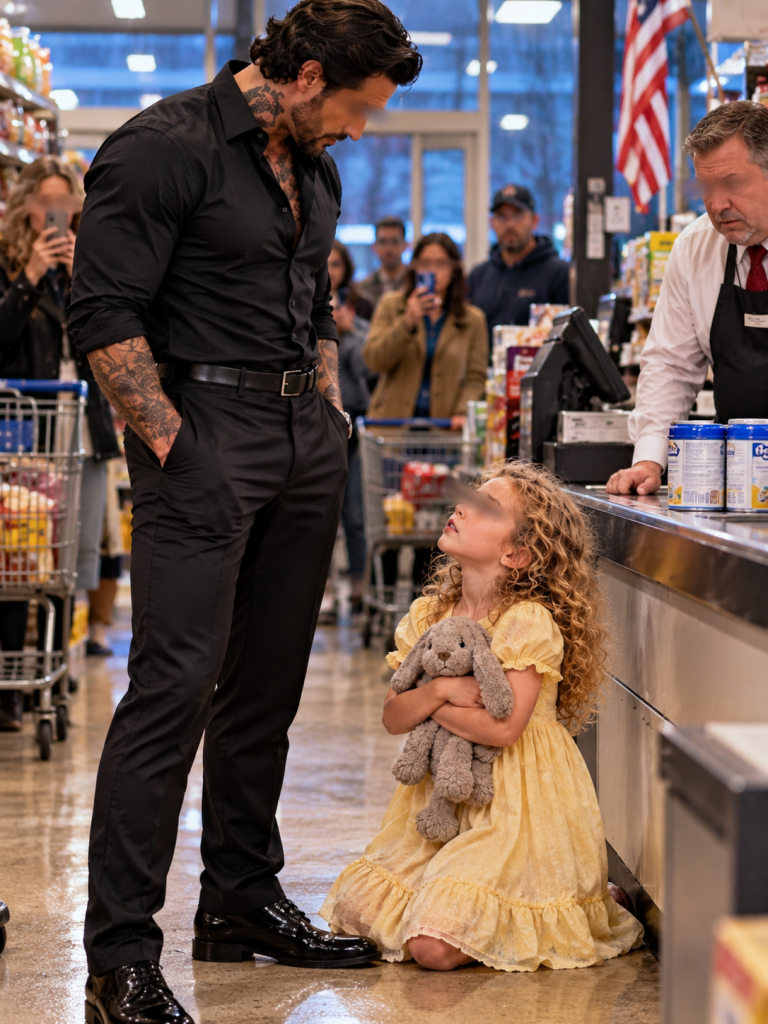
I was eight years old when I first discovered that starvation possessed a distinct sound that echoed through the walls of our crumbling home. It was not the typical rumble of an empty belly or the creak of a barren cabinet door being opened in vain. The sound of true hunger was the weakening wail of two newborn infants crying until their tiny throats could produce nothing but exhausted whimpers. By the time the third day arrived, my little brothers had barely the strength to scream anymore, and their soft moans were infinitely more terrifying to hear. That cold afternoon, a relentless rain pounded against Chicago so violently that the streets appeared to be submerged beneath a gray, unforgiving ocean. Vehicles hissed as they rolled through deep puddles, and the bitter wind pushed discarded newspapers along the gutters like terrified birds trying to escape a storm. I ran through every bit of that freezing chaos without any shoes on my feet, because my only pair had split open the week prior. I had attempted to bind the broken soles together using a piece of electrical wire I found in the alley, but the sharp metal cut deeply into my ankle, so I abandoned the shoes beside our front door and sprinted into the cold without them. The frozen pavement felt like shards of ice against my bare skin, but the physical pain was nothing compared to the panic rising in my chest.
I clutched six dollars and thirty-eight cents tightly in one trembling fist, knowing it was every single coin I had managed to scavenge from the corners of our desperate existence. I found loose change beneath the tattered couch cushions and retrieved two crumpled bills from the pocket of my father’s old winter coat that still hung in the closet. Three quarters came from a dusty kitchen jar, and I spotted a shiny dime resting beside a storm drain on the street corner. I had counted the money seventeen times to ensure I had not made a mistake, because a mistake meant my brothers would continue to starve. At home, my twin siblings, Aiden and Caleb, had not eaten properly since the previous morning, and their cries had faded into weak, raspy breaths. My mother had not left her bed in nearly two days, and at first, I convinced myself she was merely sleeping off a terrible flu. Then I stopped allowing myself to think about what her stillness might truly mean, because there were harsh realities an eight-year-old girl could afford to understand and others she simply could not. I only knew the babies needed milk, so I ran as fast as my bleeding feet could carry me.
The grocery store was blindingly bright, and the warm air hit my freezing skin like a physical blow when the automatic doors slid open. The comforting scent of fresh bread, roasted coffee, and hot chicken wafted through the entrance, and for a brief second, I simply stood there in a daze. Shoppers walked around me without a second glance, and not a single person asked why a barefoot child was soaked to the bone on a freezing November evening. Perhaps I looked completely invisible to them, or maybe adults become incredibly talented at ignoring things they do not wish to understand. I finally located the baby aisle and stared at rows upon rows of formula in different colored containers with wildly different prices. I carefully selected the two cheapest cans I could find and hugged them tightly against my chest as I hurried toward the checkout lanes. The woman in front of me was buying fresh flowers, and the man behind me carried a basket overflowing with expensive wine. Everyone around me smelled warm and wore heavy winter coats, while my teeth chattered uncontrollably in my head. When it was finally my turn, I placed the formula on the counter and watched the cashier scan both cans. She looked at her screen and spoke the words that shattered my world: “Twenty-eight sixty-four.”
My stomach dropped as though I had fallen from a great height, and I stared at her in complete disbelief. “No,” I whispered, shaking my head because the sign on the shelf had clearly said fourteen. She frowned at me and asked, “No?” and I quickly explained that the sign said fourteen. She informed me that the price was fourteen ninety-nine for each can, and my fingers went numb around the coins I held. I emptied everything onto the counter, watching as quarters rolled across the surface and pennies scattered in every direction. A nickel fell to the floor and I crawled beneath the counter to retrieve it, feeling the cold tiles against my bruised knees. When I stood up again, the cashier had begun counting my pathetic offering. “Six thirty-eight,” she announced, and I told her I had more money at home. She looked at me and then at the growing line of impatient customers behind me. “You need another twenty-two dollars,” she said, and I promised I could bring it tomorrow. A man behind me sighed loudly, and the cashier pushed the cans slightly away from her. “I can’t let you take them,” she said, and I told her my brothers needed them. When she said she understood, the words exploded from my mouth before I could stop them: “No, you don’t.”
She stiffened at my outburst, and I immediately lowered my voice to apologize. The manager arrived moments later, a tall, heavyset man with a red tie stretched across his large stomach. He asked what was happening, and the cashier explained that I did not have enough money. His eyes moved over me slowly, taking in my wet hair, bare feet, mud-covered calves, and the oversized sweater hanging off my thin frame. He exhaled deeply and asked where my parents were, and I told him my father had died. Something shifted in his face for half a second before he asked about my mother. I told him she was home, and he said my mother needed to come to the store. I explained that she could not come because she had not gotten up from bed. A woman nearby slowly lifted her phone, and I noticed the camera was pointed directly at me. “My baby brothers haven’t eaten,” I whispered, and the manager lowered his voice to tell me this was not a charity. My fingers tightened around the edge of the counter as I desperately offered to clean the store for him.
Someone laughed, a short and ugly sound, and then another person joined in. Heat climbed into my face as I insisted I could sweep and mop and do dishes. The manager glanced toward the security guard near the entrance and told me I needed to leave. I reached for the formula, but he pulled it back, and panic hit me so suddenly I could not breathe. I begged him not to make this difficult, but he insisted I could not take merchandise I had not paid for. The security guard started walking toward us, and I thought of Aiden making that weak little sound. I thought of Caleb sucking on his own fist because there was nothing left in his bottle. I thought of my mother’s cold hand when I had touched it that morning, and something inside me finally broke. I dropped to my knees in the middle of the store, and the room seemed to tilt around me. “I’ll pay you back,” I promised, but nobody spoke. My voice cracked as I swore I would return when I was older and pay for everything. I told them they could write down my name, and a phone moved closer to capture my humiliation. I saw myself reflected on its black screen, small and dirty and utterly broken. “Please, sir,” I began crying, and the tears were not loud, which somehow made it worse. “My baby brothers haven’t eaten all day.”
Someone whispered “Jesus,” while another person suggested I could be lying. A man near the candy rack muttered that kids learn scams young nowadays, and then came the laugh. It was one sharp, ugly laugh from somewhere behind me, and I stared at the floor wishing it would open up and swallow me whole. I wanted to disappear before Aiden and Caleb disappeared first, and the despair threatened to consume me entirely. Then another voice entered the room, low and calm and not loud at all. “Leave her alone,” the voice said, and everything changed in an instant. The security guard stopped walking, and the manager went pale. Even the man who had laughed lowered his eyes in shame. I turned to see a tall man standing beyond the checkout line, wearing a charcoal coat over a dark suit. Rain glistened across his broad shoulders, and I guessed he was perhaps fifty, though children are notoriously bad at guessing adult ages. His hair was black with silver beginning at the temples, and there was something very still and controlled about his face. Two men stood several feet behind him, and neither spoke a word. The stranger looked first at the manager and then at the phones. “Put them down,” he commanded, and one by one, people lowered their phones without argument. Someone behind me whispered the name “Arthur Pendelton,” and while the name meant nothing to me, it clearly meant plenty to everyone else.
Arthur walked closer, and his gaze fell on me with an intensity that made me shiver. For one strange second, his expression changed, and his eyes narrowed slightly as if he were trying to remember something important. Then the look vanished, and he crouched down until his expensive trousers touched the wet floor. “You’re going to freeze,” he observed, and I wiped my nose on my sleeve. I told him my brothers were hungry, and he said he heard me. I insisted I was not stealing, and he said he knew. I promised I could pay him back too, and one corner of his mouth almost moved. He asked how old I was, and I told him I was eight. He asked my name, and I said “Ivy.” His face went still again as he asked for my last name. “Sterling,” I replied, and the silence that followed was so small nobody else would have noticed it. But I noticed it, and I watched him repeat the name slowly. He looked at my eyes, then my hair, then the little silver chain around my neck that had belonged to my mother. A tiny oval pendant hung from it, and Arthur stared at it for far too long. When I asked what was wrong, he simply said “Nothing” and stood up. He asked the cashier how much, and when she blinked in confusion, he clarified he wanted everything I came here to get. I tugged his coat and insisted I only needed the formula, but he asked what else my brothers needed. I did not answer, so Arthur looked at the cashier and demanded diapers. Then he looked at me and asked what size, and I told him. He asked about bottles, and I said we had two. He told the cashier to get four, and I started to protest that I did not need them. He asked about blankets, and I looked down because he saw the answer in my silence. Arthur turned toward one of the men behind him and commanded him to fill a cart.
For the next ten minutes, I watched strangers move through the store with extraordinary speed. They gathered formula and diapers and baby wipes and blankets. They added bread and eggs and rice and soup. They collected fruit and medicine and toothpaste and socks. They even included a pair of shoes, and when Arthur’s man dropped them into the cart, I shook my head and said no. Arthur looked at my feet and told me I was bleeding. I had not noticed the blood, but the cashier rang everything through while Arthur paid in cash. I stared at the receipt, which looked longer than my arm, and told him he bought too much. He said “Probably,” and I asked how I could pay him back. He told me I did not have to, and I insisted that was not fair. He looked at me for several seconds and then said something I did not understand until years later: “Sometimes the debt isn’t yours.” I picked up as many bags as I could carry, and Arthur tried to stop me. He offered to send someone with me, but I refused. When he asked why, I stepped backward because my mother had taught me something before she became too tired to speak. She told me never to tell strangers where we live and never to bring anyone home, especially men who ask too many questions. I told him I could do it myself, and Arthur studied me carefully. “All right,” he said, and I thanked him. Then I hesitated and added that my mom says when someone helps you, remember their hands, not their name. Arthur’s face lost all its color, and he asked what I had said. But I was already running, and the rain swallowed me whole.
I never saw Arthur turn slowly toward the man beside him, and I never heard him ask if the man had heard what I said. I never heard the answer “Yes,” or watched Arthur stand beneath the grocery store lights staring through the glass doors. I never heard him whisper a name he had not spoken aloud in nine years: “Clara.” I ran six blocks and crossed beneath the train tracks, cutting through an alley behind a boarded-up laundromat. The neighborhood became darker with every turn, and by then my arms were burning from the weight of the bags. I dropped one bag twice, and when I finally reached our building, I shoved my shoulder into the swollen front door until it opened. The house was not really a house anymore, though it had once been painted yellow. Now most of the siding had rotted gray, and half the windows were sealed with plastic. The furnace had stopped working three weeks earlier, and I entered the living room to find Aiden crying while Caleb was terrifyingly silent. “I got it,” I announced, dropping the bags on the floor. “I got your milk.” Aiden’s tiny fists moved beneath the blanket, and Caleb opened his eyes. I ran to the kitchen to prepare their bottles, and several minutes later, the front door moved behind me.
Arthur Pendelton stepped inside, and he had followed me from a distance. He later told me he had intended only to make sure I arrived safely, and maybe that was true. Maybe the pendant had already told him he was lying to himself, because the moment Arthur entered our house, he stopped dead in his tracks. His breath fogged in the freezing room as he saw the babies and the broken heater. He saw the empty cans of food and the candle we used because the electricity in half the house had been disconnected. Then he heard me call for my mother, and he watched me stand beside the narrow bed against the wall. “Mommy?” I said, but my mother lay beneath two thin blankets with a gray face and cracked lips. “Wake up,” I pleaded. “I found formula.” Nothing happened, so I touched her shoulder and tried again. Arthur came closer, and then he saw her face. The grocery bags slipped from his hand, and oranges rolled across the floor. One stopped beneath the bed, and for the first time that day, the man who had frightened an entire supermarket looked afraid. “No,” he breathed, crossing the room in three quick strides. “Clara?” My head snapped toward him because I had never heard anyone call my mother that. Her name was Mara, at least that was the name I knew. Arthur knelt beside the bed, and his hand hovered above her face without touching her. He said the name again, and his voice cracked. I backed away and demanded to know who he was. He looked at me with tears in his eyes, actual tears, and I had not known men like him could cry. “Your mother,” he whispered, “is my daughter.” Then he reached for his phone, and the world I had known for eight years began to come apart.
The ambulance arrived in six minutes, and I remember every single one of them. Arthur’s men wrapped the twins in coats while someone put shoes on my feet. A paramedic lifted my mother onto a stretcher, and I fought him with every ounce of strength I had. “Don’t take her!” I screamed, and Arthur caught me before I could grab the wheels. He told me they were helping her, but I insisted she would be scared. He said she was unconscious, and I cried that it was worse because she wakes up scared when she does not know where we are. Arthur looked like I had physically struck him, and he climbed into the ambulance with us. At St. Vincent Medical Center, doctors took my mother through two white doors while the twins went to pediatrics. A nurse tried to take me too, but I refused to move unless I could see everyone. So they put us in rooms beside each other, and Arthur sat outside for five hours. He made no phone calls and attended no meetings. He did not disappear. He simply sat in a plastic chair beneath fluorescent lights with his bloody expensive coat folded across his knees. At 2:17 in the morning, a doctor came out and called for Mr. Sterling. Arthur stood and said he was not Sterling. The doctor looked at his chart and asked if he was family. Arthur hesitated, then looked through the window at me. “Yes,” he said, and the doctor lowered his voice.
The doctor explained that my mother had severe postpartum complications, malnutrition, pneumonia, and systemic infection. He paused and said that another day would have been too late. Arthur understood the implication and asked if she would live. The doctor said they thought so, and Arthur’s shoulders lowered in relief. When asked about the babies, the doctor reported they were dehydrated and underfed but stable. Arthur closed his eyes and asked about me. The doctor glanced at me and described mild hypothermia, cuts on my feet, and being underweight. Arthur looked through the glass while I pretended to be asleep, and I heard everything. The doctor said quietly that I had kept them alive, and Arthur did not answer for a long time. Then he said I was eight years old, and the doctor agreed that I should not have had to do what I did. Arthur sat down again and covered his face with both hands, and that was the first moment I began to understand that grown men could look powerful while carrying ruins inside them. My mother remained unconscious for two days, and Arthur never left for long. He bought Aiden and Caleb proper clothes and brought me pancakes I did not eat. He arranged for nurses to stay outside our rooms, and I hated them for it. I told him he had too many people, and he said they were security. When I asked what they were protecting us from, Arthur said it was complicated. I accused him of being a criminal because I had heard someone whisper the word mafia outside the elevator. I had heard racketeering and extortion, names children should not understand. Arthur leaned back and admitted he had done things he was not proud of. I said that meant yes, and he agreed. I asked if he had hurt people, and his face changed as he said yes. I studied him carefully and asked if he had hurt my mom. Arthur stopped breathing for a second and said he did not know.
It was the strangest answer he could have given, and then he added that he thought he may have hurt her enough that she believed she had to disappear. That was worse, and Arthur told me the story slowly. My mother had been born Clara Pendelton, and she had grown up in a house larger than my entire school. She had piano lessons and horse riding lessons and a bedroom with windows facing Lake Michigan. She had also grown up surrounded by men who carried guns, and Arthur had loved her more than anything. That was what he said, though love, I would learn, does not automatically make a person safe. When Clara was nineteen, she fell in love with Elias Sterling, my father. Arthur hated him, not because Elias was cruel, but because he was ordinary. He studied architecture and came from a working-class family, and more importantly, he refused to be afraid of Arthur. Once, Arthur told me, Elias had stood in his dining room while six armed men watched and declared that he was not asking permission to love Arthur’s daughter. Arthur had replied that he should be, and Clara left home three weeks later. Arthur expected her to return, but she did not. Then, nine years earlier, a car registered to Elias Sterling was found at the bottom of a ravine north of the city, burned beyond recognition with two bodies inside. Identification was impossible, but Arthur’s people confirmed Clara and Elias had been driving that road. There was blood and jewelry and Clara’s purse, and everyone told him the same thing: they were dead. Arthur buried an empty coffin for his daughter, and I watched his face as he told me this story.
I told him my mom never said any of this, and he said he was sure. I asked why she changed her name, and he said he did not know. I asked why she did not tell him she was alive, and that question visibly hurt him. He said he did not know that either, and I suggested that maybe she hated him. Arthur nodded and admitted that maybe she did, and for the first time, I felt sorry for him. Only a little, but it was something. My mother woke on the third morning while I was beside her and Arthur was outside. Her eyes opened slowly and she said my name. I nearly fell across the bed in relief, and she touched my face and asked about the babies. I told her they were okay, and she started crying. She apologized to me, but I told her no. She kept saying she was sorry, and I told her she was sick. I explained that someone had helped us, and her eyes moved toward the doorway where Arthur stood. My mother’s entire body became rigid, and the monitor beside her accelerated with rapid beeps. Her fingers crushed mine as she said no, and Arthur did not move. He said her name, but she screamed at him to get out. A nurse ran in, and Arthur backed away immediately. My mother shook so hard the bed rails rattled, and she gasped that he had found us. Arthur’s face in the doorway looked less like a gangster and more like a man watching the same person die twice. He told her he was not there to hurt her, and she laughed terribly. She reminded him that he had said that nine years ago, and Arthur went white. She turned toward him and described the night two days before their car went over the ravine. Arthur’s mouth opened, but nothing came out. She told him he had said Elias would disappear if she stayed with him, and he started to explain what he meant. She cut him off, saying she knew exactly what he meant. She told him his men had chased them, a black sedan with two men inside.
Arthur stopped and asked what she was talking about. She explained that Elias knew the road and killed the headlights, taking a service turn and abandoning the car before they were caught. They pushed it down the ravine themselves and planted the jewelry. Arthur stared at her as she revealed they had staged their deaths because she believed he would never stop hunting them. Arthur insisted he did not send anyone, but she told him not to lie to her now. He stepped into the room and swore he was furious and said things he regretted, but he never ordered anyone to follow her. My mother looked at him with nine years of fear and then spoke five words that changed everything: “Dominic showed me the order.” Arthur froze and repeated the name. She described his signature, his seal, and Elias’s photograph. For the first time, something colder than grief entered Arthur’s face, and it was not rage but recognition. He sat down slowly and told her that Dominic had told him she was dead. The monitor continued beeping as Arthur looked at the floor and explained that Dominic had identified the car and brought him her necklace. My mother stopped breathing, and her fingers moved instinctively toward her throat. The pendant was gone because it was around my neck. Arthur looked at it and said he had buried that necklace inside an empty coffin. My mother stared at him as Arthur raised his eyes and revealed that yesterday he saw it around my neck. No one moved as the realization settled over us that the past had not been an accident. Someone had built it piece by piece, and that someone was Dominic Vale.
Dominic had been Arthur’s closest friend for thirty-one years, standing beside him at his wedding and holding Clara when she was a baby. He managed Arthur’s businesses and attended Clara’s funeral. He comforted Arthur when he drank himself unconscious afterward. He was also the man who told Arthur that Elias Sterling had stolen money. He was the man who insisted Elias was manipulating Clara and claimed Elias had enemies. He was the man who handled the investigation into the crash, and every road led back to Dominic. Arthur made one phone call and demanded the old Sterling files, and an hour later, boxes arrived. My mother refused to look, but I did because adults forget children exist when they are afraid. Inside one box were photographs of my father leaving work and getting coffee and holding flowers. Then there was a photograph of my mother, young and laughing and pregnant. I recognized the coat because she still kept it in the closet. Arthur picked up the photograph and asked when it was taken. My mother stared and said it was three months after they disappeared. Arthur turned it over and saw a date written on the back from eight years and seven months earlier. His eyes moved toward me slowly, and I felt something change in the room. My mother closed her eyes as Arthur whispered her name. She said nothing, and he asked if I was Elias’s child. She said yes, and his face crumpled quietly as though some internal structure had finally failed. Arthur walked toward me and stopped several feet away. He told me I was his granddaughter, and I crossed my arms and said “Apparently.” My mother almost laughed, and Arthur did laugh once, a broken little sound. Then he turned away because he did not want us to see him cry. I already had.
For the next week, Arthur did something no one expected: he obeyed boundaries. When my mother told him not to enter without knocking, he knocked. When she refused his house, he did not force her. When she said she wanted a small apartment after discharge, he found one. When she rejected the luxury building he chose, he found another that was warm and safe and nothing excessive. He brought groceries but stopped sending men inside. He learned how to hold Aiden without looking terrified, and he learned that Caleb only slept when someone hummed. He learned I hated peas, and he learned my mother still drank coffee with too much cinnamon. Little things are often where forgiveness begins, and one afternoon I found Arthur sitting beside Caleb’s crib. I told him he looked weird, and he thanked me. I observed that he was smiling, and he said he was aware. I pointed out that he never smiled, and he claimed he did once in 1998. I laughed, and he looked pleased with himself. Then he said my mother smiled like that, and my laugh disappeared. I asked if that was before he scared her away, and Arthur looked down and admitted it was. I asked if he wished he could go back, and he said every day. I asked what he would change, and he thought for a long time. Then he said he would stop confusing control with love, and that answer stayed with me for years.
Three weeks after my mother woke, Arthur found the first crack in Dominic’s story through an accountant named Louis Carver who had been dead for six years. Carver had left behind a safety-deposit box containing a ledger, not of Arthur’s criminal accounts, but of Dominic’s. Millions had disappeared over almost two decades, small amounts first and then larger ones. Elias had discovered it while doing renovation work on one of Arthur’s legitimate properties. He noticed invoices for buildings that did not exist and copied them before confronting Dominic. Dominic panicked because while Clara had not been the target, Elias had been. But killing Arthur Pendelton’s daughter would have been unforgivable, so Dominic built another solution. He made Arthur believe Elias had stolen money and made Clara believe Arthur wanted Elias dead. He forced them to run and then staged an accident so nobody would search for them. For nine years, it worked, until Aiden and Caleb were born because Elias needed money. He contacted an old friend in Chicago who mentioned his name in the wrong bar, and Dominic heard. Six weeks later, my father died when scaffolding collapsed at a construction site. The police called it an accident, but my mother never believed it. She took the babies and disappeared deeper into the South Side, stopping all contact with friends and banks and anyone who might help. She believed Dominic worked for Arthur, so every time we suffered, she believed suffering was the price of staying alive. That was the part Arthur could not forgive, not Dominic, but himself. Because Dominic’s lie had worked for one reason: Clara believed her father capable of it. Arthur could say he never ordered the killing and prove the signature was forged and the seal was copied, but he could not erase the man he had been. He could not erase the threats or the fear or the violence surrounding his name. He could not erase the night he told his nineteen-year-old daughter that if she left with Elias, she should not expect him to protect her from what happened next. He had meant poverty and hardship and regret, but in Arthur Pendelton’s world, words did not stay ordinary once spoken. They became weapons.
Dominic came to the hospital himself, which was his mistake because he did not know Arthur knew. He walked into my mother’s room carrying white lilies, and my mother dropped her water glass. It shattered on the floor as Arthur sat near the window, and Dominic stopped in his tracks. Arthur told him to close the door, and Dominic looked at Clara. For half a second, his face revealed everything: shock and fear and calculation. Then warmth returned, and he stepped forward with a smile, saying her name. My mother shrank back, and Arthur stood and told him not to come closer. Dominic claimed he did not understand, and Arthur placed copies of the ledger on the table. Dominic looked down, and nothing changed in his face. That impressed me because even at eight, I understood some people become dangerous when they stop reacting like human beings. Arthur accused him of stealing and forging signatures and hunting his daughter and murdering Elias Sterling. My mother made a small sound, and Dominic turned toward her with an apology on his lips. Arthur moved between them and told him not to speak to her. Dominic’s jaw tightened, and he looked at Arthur with something almost like disappointment. He called Arthur emotional, and Arthur laughed softly, noting that used to be Dominic’s favorite weakness in other people. Dominic pointed out that this woman had staged her death and let Arthur mourn for nine years. Arthur countered that she was nineteen, and Dominic said she made a choice. Arthur replied that Dominic gave her one, and Dominic’s eyes hardened. There it was, not a confession, but close. Arthur stepped nearer and asked why. Dominic’s control finally cracked as he insisted that Elias was going to destroy everything.
Arthur asked if he meant Elias, and Dominic explained that Elias had invoices and copies and was going to the police. Arthur asked if that was why Dominic framed him, and Dominic claimed he protected them. Arthur accused him of protecting himself, and Dominic’s voice rose as he insisted everything Arthur built was under attack. Arthur said his daughter was not a building, and Dominic shouted that she chose Elias over him. The room went silent as Dominic realized what he had said. My mother stopped shaking, and Arthur simply stared at him. Dominic looked older suddenly, smaller, but he continued anyway because people who lie for decades forget how to stop. He explained that Arthur was going to forgive Elias, and Arthur’s brow tightened in confusion. Dominic laughed bitterly and revealed that Arthur had told him to make Elias disappear, but the next morning Arthur called and said he wanted to speak to Elias first. My mother looked at Arthur, whose face went blank. Dominic continued, explaining that Arthur was going to let them marry and give them money and let them walk away. Arthur whispered that he was, and Dominic’s eyes burned as he asked if that was after everything they built together. That was the moment the final truth emerged, not that Dominic wanted Clara or hated Elias personally, but something sadder and smaller. He was afraid Arthur would choose his daughter over the empire they had built together, so he made sure Arthur never got the chance. Dominic looked at Clara and said he never meant for her to live like that. My mother stared at him and said he did not mean for her to live at all. He had no answer.
Arthur reached into his coat, and Dominic flinched. So did my mother and so did I. But Arthur did not pull out a weapon. He pulled out a phone and placed it on the table with the screen recording. Dominic stared at it as Arthur told him to say it again. Dominic went pale, and behind the hospital door, two detectives waited because Arthur had called them himself. Dominic understood and asked if Arthur would hand him to the police. Arthur said yes, and Dominic asked if he really would after everything. Arthur looked at my mother and then at me and then toward the nursery where Aiden and Caleb were sleeping. He said that was exactly why. The detectives entered, and Dominic did not resist. As they took him away, he turned once and asked if Arthur thought this made him clean. Arthur did not answer immediately, but then he said no. His voice was quiet as he added that it made him late. The door closed, and Dominic was charged with fraud and conspiracy and multiple financial crimes. He was eventually charged with my father’s murder after evidence was found tying one of his shell companies to the construction contractor responsible for the failed scaffolding. Arthur cooperated, not because cooperation erased his life, because it did not. He gave investigators records going back years, and people were arrested and businesses were closed. Newspapers called it the Pendelton collapse, and Arthur’s lawyers called it catastrophe. Arthur called it overdue. He lost money, a great deal of it, and he lost power. Some friends vanished the moment his name stopped protecting them, but he did not seem sorry.
My mother recovered slowly, physically first, though emotional recovery is less obedient. Some mornings she could sit beside Arthur and drink coffee, and other mornings she could not look at him. He accepted both and never asked for forgiveness, which may have been why she eventually gave him some. Six months later, we moved into a narrow brick house with blue shutters. It was not Arthur’s mansion; it was ours. It had three bedrooms and a warm kitchen and a maple tree in the front yard. It had a refrigerator that was always full. On the first night, I opened it seven times just to look at the milk and eggs and strawberries and cheese and two full cans of formula on the shelf even though Aiden and Caleb were already beginning to outgrow it. My mother found me staring and asked if I was okay. I nodded and then asked if we could keep extra. She asked extra what, and I said food. Her face changed, and she knelt beside me and told me as much as I wanted. So we did, for years, even when we had enough. I could not sleep if the pantry became too empty. Arthur came every Sunday. At first he arrived in dark cars, but eventually he drove himself. He learned to grill badly and pushed Aiden on the swing. He let Caleb draw on legal documents once, and he taught me chess. I beat him when I was eleven, and he accused me of cheating. I told him he had raised a criminal, and my mother nearly choked laughing. Those were the happy years, or the beginning of them, but the final secret came much later.
I was sixteen when my mother and I were cleaning the attic and I found a dented metal box belonging to my father. Inside were old receipts and photographs and a train ticket and a cheap watch and eight envelopes. Each envelope had Arthur Pendelton’s name written on the front. One for every year between my birth and the twins’. None had been mailed. I called for my mother, and when she turned and saw them, she sat down. I opened the first one and found a letter from my father. It began with Arthur’s name and explained that he might never see this. Elias wrote that Clara still believed Arthur sent the men, but he did not know anymore. Sometimes he thought Dominic did this, and sometimes he thought he was inventing a version where Arthur did not because he needed to believe I had one grandfather who was not trying to kill us. He wrote that I was born yesterday, seven pounds and two ounces, and that Clara said I had Arthur’s eyes, though he disagreed and thought I had hers. There was a photograph of newborn me with my father holding me and my mother sleeping beside him. I opened another letter written when I turned three, in which Elias explained that I asked why other kids have grandfathers, and he told me mine lived far away, which was technically the truth. He wrote that I liked pancakes and hated thunder and talked constantly. He said Arthur would pretend it annoyed him but it would not. Another letter described seeing Arthur on television and Clara turning it off. Elias wrote that Arthur looked older, and so did they. He almost called but did not. I opened the last envelope, written six weeks before my father died.
The letter revealed that the twins were coming and Clara was terrified. Money was almost gone, and Elias had found evidence he thought proved Dominic was the one who ordered the men after them. He wrote that if he was right, he owed Arthur an apology for believing the worst. But he also wrote that Arthur owed Clara an apology for making the worst so easy to believe. He said that if something happened to him, he needed Arthur to know one thing: find them. Not for Arthur’s sake, but for theirs. I stopped reading, and my mother was crying silently. I asked why my father did not send the letters, and she said he kept changing his mind because fear becomes a habit. I stared at the letters, and then something occurred to me about the day at the store. Arthur had said something that I could still hear in his voice: “Sometimes the debt isn’t yours.” And before that, his face when I told him what my mother always said. I asked my mother where she learned the sentence about remembering hands, not names. She closed her eyes and said she learned it from her mother. Arthur’s wife. My grandmother. A woman who had died before I was born. I understood then that the sentence was why Arthur followed me home. Not only the pendant. Not only my surname. Something older had called to him, a ghost inside a child’s voice.
I brought the letters to Arthur that evening. He was sixty-three by then, slower and quieter, and he wore glasses to read. He sat on our porch while the twins chased fireflies in the yard. I handed him the box and told him it was from my father. Arthur’s hands stopped, and he read every letter. He never cried loudly, not once, but after the last page, he leaned forward and pressed both hands against his face. The same hands I had first noticed at eight years old. Large and scarred with a gold ring on one finger. Hands that had frightened people and signed documents and made threats. Hands that had also carried Aiden through a hospital corridor and bought formula and learned how to hold a baby without waking him. I sat beside him, and after a while, Arthur whispered that Elias was going to call him. I agreed. He said he could have known me. I agreed again. He said all those years, and I did not tell him it was okay because it was not okay. Some losses should not be comforted into meaninglessness. Instead, I told him that my father wanted him to find us. Arthur looked at me and admitted he almost did not. I pointed out that he did, and he said it was because I was on my knees in a grocery store. I looked toward Aiden and Caleb, who were eight by then, the same age I had been. They were healthy and loud and arguing over a jar of fireflies. The sight broke something open inside me, and I suddenly saw myself at eight. Wet and barefoot with coins on a counter while adults filmed and I begged strangers not to let two babies starve. For years, I had remembered that afternoon as the most humiliating moment of my childhood.
Arthur looked down at the final letter and noticed something neither of us had seen. There was writing on the back, a single line in my father’s handwriting, faint and almost erased. It read: “If Clara is too afraid to call Arthur, someday Ivy might lead him back to us. She has a way of walking straight toward trouble when someone she loves is hungry.” Arthur read it twice, and neither of us spoke. My father had written those words weeks before he died, before the grocery store and the rain and the coins and my knees hitting the floor. Before Arthur Pendelton heard an eight-year-old girl repeat his dead wife’s favorite sentence and followed her through Chicago. The thing that had haunted me for half my life suddenly changed shape. That grocery store had not been the place where I lost my dignity. It was the place where a dead father’s last impossible hope came true. Years later, people still remembered the video of the barefoot girl kneeling while strangers watched and a feared man stepped through the crowd. Most people thought that was the moment Arthur Pendelton saved me. They were wrong, because sometimes a child does not know she is carrying an entire lost family home until someone finally recognizes the road behind her.